
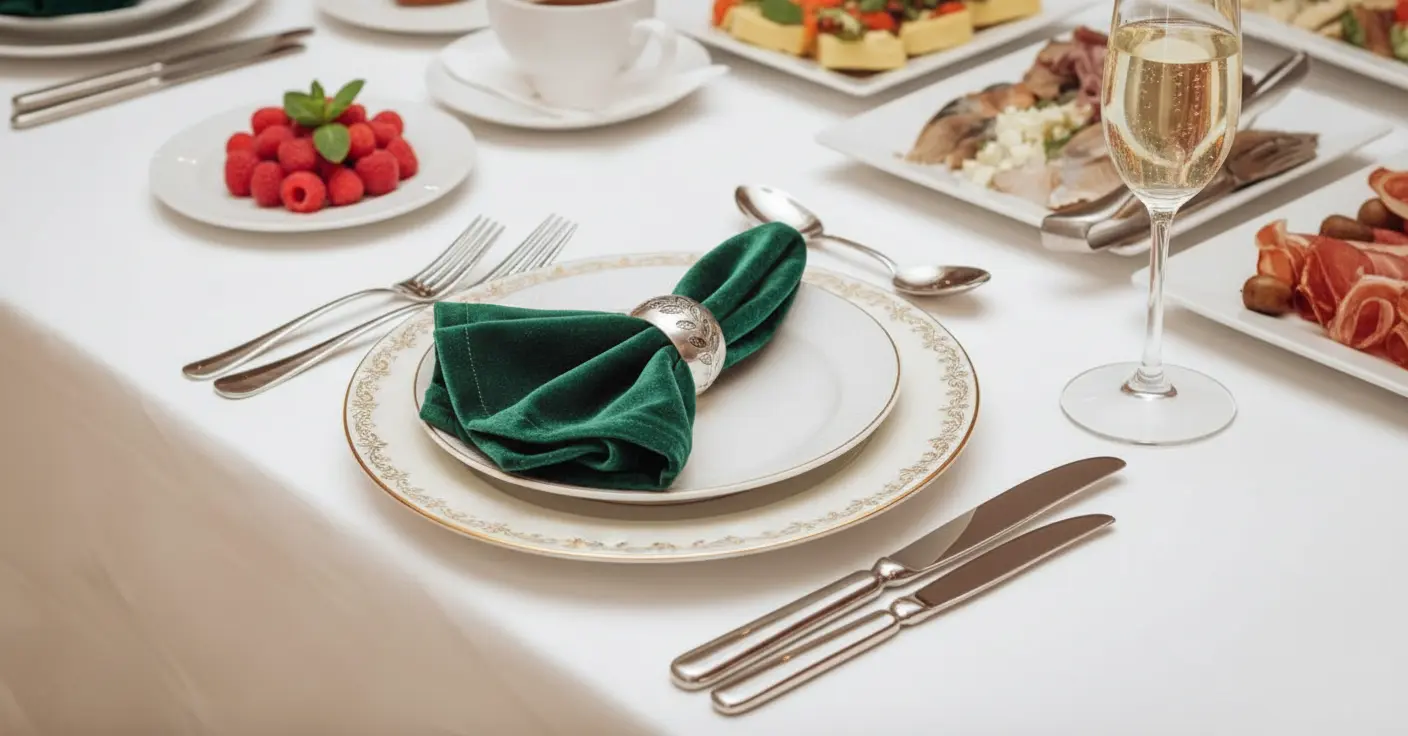
Ever wondered why, when you sit down at a beautifully set table, the fork is always standing loyally on the left and the knife reliably stationed at the right? Is it a hidden code only butlers know, or have you simply been copying what your grandma did? The answer has roots far deeper (and sharper) than you might think. The real reason forks go left and knives right will truly surprise you!
A Subtle Ritual at Every Table
- The arrangement of cutlery isn’t just about keeping your table looking polished.
- It’s a delicate ritual, where every item finds its purpose, crafting an experience as meticulously curated as a tasting menu.
Let’s admit, most of us place our fork and knife as we’ve always seen it done—fork left, knife right—and trust this is « proper manners. » Yet, this tradition, especially in French-style table settings, reveals an eye for detail that goes beyond simple decorum. Here, the positioning of fork and knife becomes much more than just another rule—it is central to dining etiquette and ambiance.
From the XVI Century to Your Dinner Table
This apparently simple arrangement actually reaches all the way back to the 16th century. At that time, the knife was king (or, perhaps, knight) of the table—a true multitasking tool. Not only did it slice food; it even made the journey from plate to mouth, acting as the main conduit for those precious calories.
The tradition of cutlery placement, then, isn’t just dusty formalism: it is a gentle reflection of culinary practices of centuries past, and a quiet homage to the evolution of dining customs. By carefully placing our utensils, we subtly celebrate this history, adding elegance to even the most contemporary meal.
The Knife: Not Just a Sharp Tool
- The knife hasn’t always been just a utensil—it was once a defensive tool, a table’s silent protector.
- Positioning the knife to the right of the plate, in many ways, mirrors where knights once wore their swords: right side, always ready (don’t worry, you won’t need to joust for dessert).
The knife predates the fork at the table, and its dominant position is more than symbolic. Its versatility stretches beyond carving meat; it is the star of the culinary show. This prime role is why handling it should feel effortless. And here’s the rub: since most people are right-handed, it simply makes life easier to clutch the knife in your right mitt—thus, it takes pride of place to the right of your plate.
So, the cutlery choreography combines both tradition and practicality, guaranteeing a smooth, enjoyable dining experience for everyone at the feast.
The Art of Proper Placement
Setting the table isn’t just about getting the seats right for your guests—it’s down to the finest details, too.
- Remember: the tip of the knife should always point up, with the sharp edge facing the plate.
- This clever orientation prevents any « threat » to your neighbor—no unintended saber rattling at the soup course!
But wait—this isn’t where the knife’s role ends. Beyond meat or fish, the knife finds its way to dessert, too. At the meal’s sweet conclusion, it lies horizontally between the glasses and the plate, again with the blade facing in and the handle conveniently to the right, so you can swiftly seize it as the occasion demands.
Similarly, the dessert fork follows this same logic: its handle lies to the left, closest to the plate. This precise choreography lets every item shine in its own role, balancing elegance and everyday function in a modern gastronomic ballet.
Conclusion: History, Subtlety, and an Elegant Table Await
So, the next time you dress your dinner table, think of these centuries-old, carefully measured rules—not as rigid constraints, but as invitations to connect with a living tradition. By embracing historical nuance and these minute details, your festive table promises not just a meal, but a remarkable, memorable experience—one where every guest wields their utensils with confidence and perhaps, just a little more appreciation for the choreography of fine dining. Your elegant setting might even inspire your guests to ask: « Why does the fork go left again? » And now, you’ll know exactly what to say!

John Smith is a culinary enthusiast and food blogger who discovered his love for Asian cuisine during his years living in Seoul and Tokyo. With a background in journalism, he brings a storytelling approach to exploring the cultural significance behind every dish. John is passionate about making Asian cooking accessible to home cooks and sharing the vibrant food scenes he encounters in his travels.


