
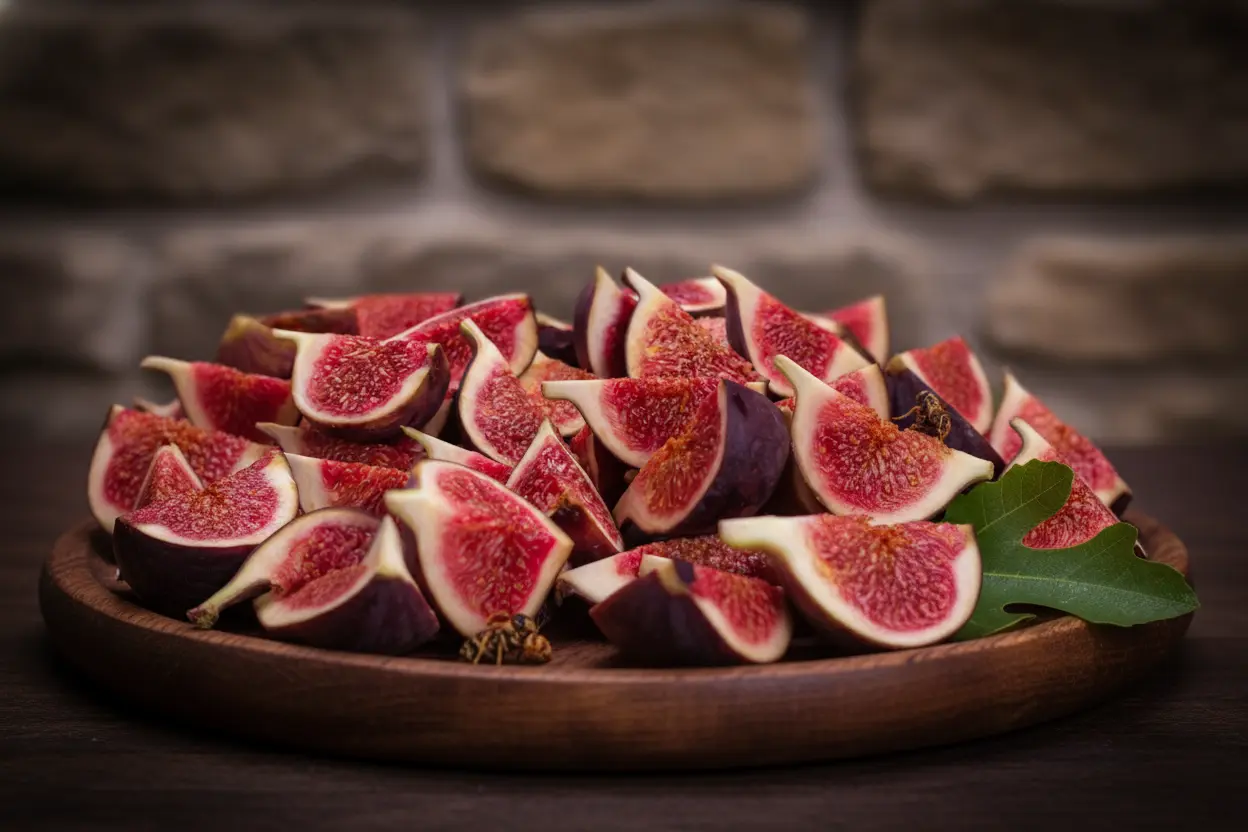
Let’s face it—figs are delicious, irresistible, and, dare we say, a little mysterious. But did you know that every time you bite into this luscious fruit, you’re also tasting the story of a partnership so quirky it could be the plot of a grey comedy? Meet the fig wasp: the unsung hero (or secret ingredient?) in your figgy delight.
The Fig and Its Unlikely Tiny Ally
- Without the blastophaga (that’s the fancy name for the fig wasp), many varieties of wild figs wouldn’t exist as we know them.
- This tiny, black insect—1 to 2 mm long, belonging to the Agonidae family—plays a crucial role in fig pollination.
So how does this work? In the wild, fig trees—especially caprifigs—rely entirely on this wasp to ferry pollen from the male flowers to the female ones, all hidden within the fig itself. Without this method of pollination, figs just wouldn’t grow properly. It’s an obligate mutualism: figs and wasps need each other. No wasp, no figs. No figs, no wasp nursery. Both species are quite literally in it together!
A Life Cycle Unlike Any Other
The blastophaga’s life cycle is all about teamwork (and a bit of drama). Female wasps carry pollen and squeeze through a tiny opening into the fig. In doing so, they often break their wings and antennae—a rough entry with only one way out: none. Their mission: lay eggs inside the fig’s inner flowers. While the larvae develop, male wasps (barely seeing the world outside) tunnel exit routes for fertilized females to escape, who then fly off loaded with pollen, ready to repeat the cycle in a new fig.
But here’s the kicker: after laying her eggs, the female often dies inside the fig. Cue the fig’s enzymes, which break down her body, making it unnoticeable and entirely safe to consume. You get all the sweet fig flavor, and none of the wasp crunch—which is probably for the best, unless you’re looking for extra protein.
The Secret Architecture of the Fig
Here’s a fact that puzzles many label-readers at the farmer’s market: is the fig a fruit or something entirely different? Botanically, the fig is indeed a fruit—but not like your average apple or cherry. The fig is a complex structure called a ‘syconium’ or ‘syncarp’: it’s actually made up of many tiny, inverted flowers growing inside a fleshy container. Floral inversion is the technical term.
- What you think are seeds are really the remnants of those transformed flowers.
- Botanically, this classifies figs as a ‘multiple flowering’ fruit, meaning many flowers are fused into one edible unit.
- This differs from ‘simple’ fruits which develop from a single flower.
The result? A fruit that’s not just tasty and packed with flavor, but also a marvel of natural design. Nature, as always, refuses to be boring.
Choosing, Growing, and Enjoying Figs—With or Without Tiny Friends
Figs are icons in both sweet and savory dishes: fresh for breakfast, baked in crumbles, paired with goat cheese, or turned into a fragrant winter treat by drying. With over 700 varieties, purple and white figs dominate the market. And here’s a tip: figs are ‘non-climacteric’—they don’t ripen further once picked. So choose fruit that’s already mature (it should be soft but not mushy, and a drop of white sap at the stem means it’s extra fresh).
If you fancy growing your own, April is the ideal time for fig planting—even in chillier regions. Each variety brings its own flavor and climate needs. For a pretty striped option that ripens late summer, try ‘Panachée’. Grown with ease in the south, or even up to Île-de-France if shielded from the worst of the elements, its sweet, aromatic pink flesh is thick-skinned enough to dry for winter eating. Specialist nurseries sell them in containers, and plant fairs mark the season’s start for fig fans.
A quick word of warning: figs have their enemies too, notably the fig fly (Lonchaea aristella). Attacking 30 to 40 days before ripeness, these flies lay eggs, whose cream-colored larvae munch tunnels in the fruit. The tainted fig develops purple-red spots and falls off prematurely, sometimes wiping out up to 70% of the crop. To fight back:
- Pick up and destroy all fallen, immature figs.
- Set insect traps in trees to catch adults.
- Spray plants with tansy infusions.
- If you have chickens, let them clean up the larvae on the ground—nature’s cleaning squad.
And remember: figs bruise easily. For the best flavor, don’t store figs in the fridge (or at least let them stand at room temperature for 30 minutes before serving). If chilling is needed, wrap them in food film or a sealed box, so they don’t soak up your fridge’s mysterious smells.
Yes, you can freeze figs for up to six months: freeze them spaced out on a baking sheet first, then transfer to a bag once solid so they don’t stick together. Handle gently—they’re precious!
Final thought: The next time you enjoy a fig, raise a toast to the little wasp whose silent work makes this culinary marvel possible. Sometimes, life’s hidden partnerships yield the juiciest results!

John Smith is a culinary enthusiast and food blogger who discovered his love for Asian cuisine during his years living in Seoul and Tokyo. With a background in journalism, he brings a storytelling approach to exploring the cultural significance behind every dish. John is passionate about making Asian cooking accessible to home cooks and sharing the vibrant food scenes he encounters in his travels.


