
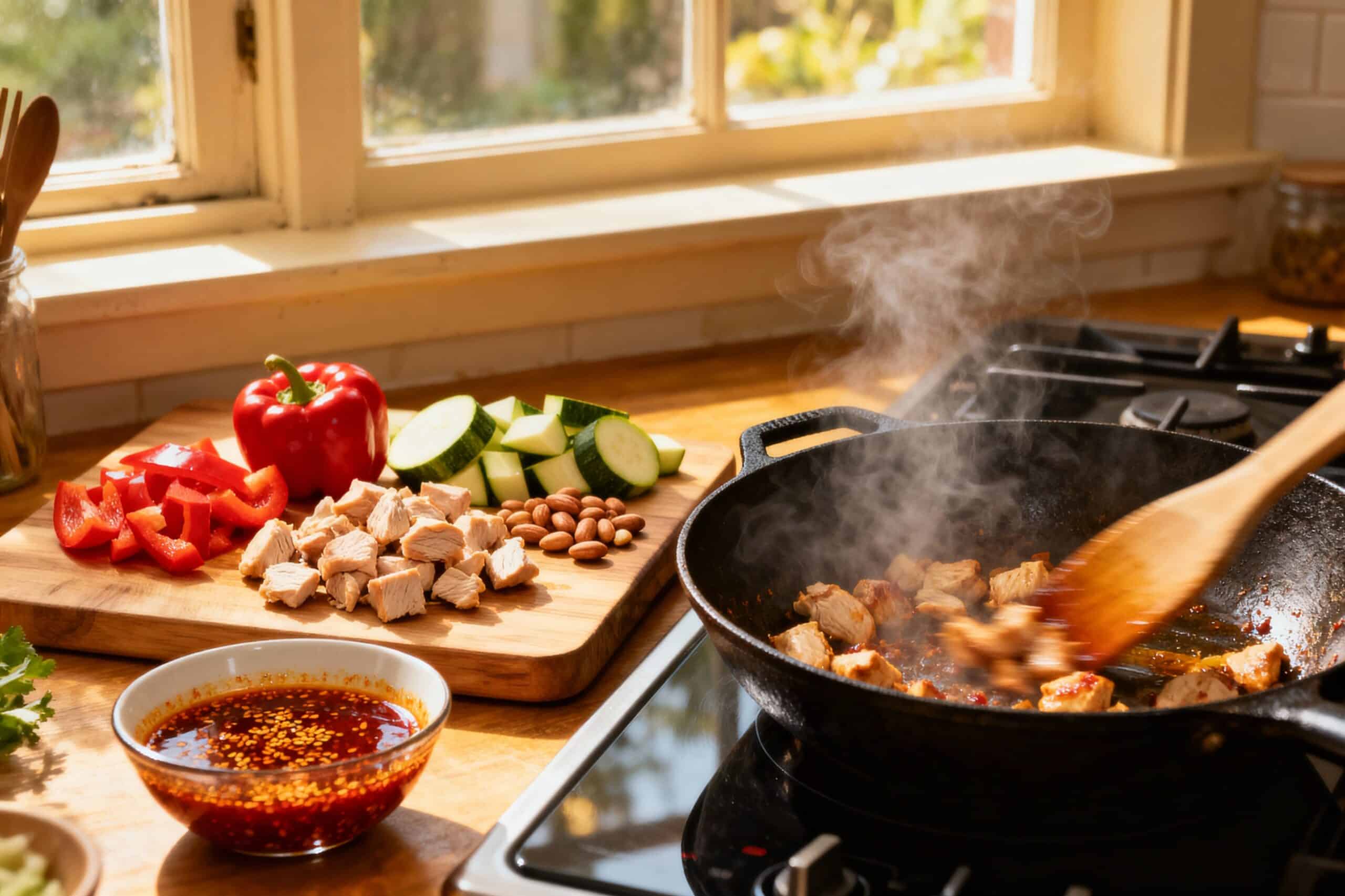
Craving that perfect balance of spicy, sweet, and nutty flavors from your favorite Chinese restaurant? This complete guide shows you how to make kung pao chicken naturally at home using simple ingredients and easy techniques. You’ll discover the secrets to creating tender chicken with that signature glossy sauce, plus pro tips for getting the heat level just right and avoiding common mistakes that ruin this beloved dish.
How to make kung pao chicken?
Learning how to make kung pao chicken starts with understanding this classic Sichuan dish features tender chicken pieces, crunchy peanuts, dried chilies, and vegetables in a perfect balance of sweet, sour, spicy, and numbing flavors. The dish combines marinated chicken with a glossy sauce made from soy sauce, vinegar, hoisin sauce, and sugar, while Sichuan peppercorns provide that distinctive tingling sensation.
The cooking process involves stir-frying marinated chicken at high heat, then combining it with aromatics like garlic and ginger, vegetables such as bell peppers and scallions, and finishing with the signature sauce. Traditional recipes call for dried red chilies and toasted peanuts or cashews for texture contrast.
Success depends on proper preparation and timing. You’ll want to have all ingredients prepped before heating your wok or large skillet, since the actual cooking happens quickly over high heat.
What makes kung pao chicken shine in a home kitchen
This dish transforms any weeknight dinner into something special because it delivers restaurant-quality flavors using ingredients you can find at most grocery stores. The magic lies in the sauce’s complex flavor profile that balances multiple taste elements without requiring exotic cooking techniques.
Unlike many stir-fry dishes, kung pao chicken offers incredible flexibility. You can adjust the heat level by controlling the amount of dried chilies and chili flakes, making it suitable for different spice preferences within the same household.
The texture contrast keeps every bite interesting. Tender chicken pairs with crunchy nuts and crisp vegetables, while the glossy sauce ties everything together. This variety means the dish never feels monotonous, even when you make it regularly.
Time efficiency makes it perfect for busy schedules. Once you’ve prepped the ingredients, the entire cooking process takes less than 15 minutes. The marinade can be prepared hours ahead, and the sauce keeps well in the refrigerator for up to a week.
The recipe: step-by-step instructions
How to make kung pao chicken at home
Start by cutting 1 pound of boneless chicken (breast or thigh) into 3/4-inch cubes. Chicken thighs provide juicier results, though breasts work well if you prefer leaner meat. Place the chicken in a bowl with the marinade ingredients and let it sit for at least 20 minutes.
While the chicken marinates, prepare your sauce by whisking together all sauce ingredients in a small bowl. Having this ready prevents scrambling during the fast-paced cooking process.
Heat 2 tablespoons of oil in a wok or large skillet over high heat until it shimmers. Add the marinated chicken in small batches to avoid crowding, which causes steaming instead of proper searing. Cook each batch for 2-3 minutes until golden brown, then transfer to a plate.
In the same pan, add dried chilies and Sichuan peppercorns, stir-frying for 30 seconds until fragrant. Add garlic, ginger, and white parts of scallions, cooking for another 30 seconds. Toss in bell peppers and stir-fry for 1-2 minutes until crisp-tender.
Return the chicken to the pan, add the prepared sauce, and stir everything together. Cook for 2-3 minutes until the sauce thickens and coats the ingredients. Remove from heat, add toasted peanuts and green parts of scallions, then serve immediately.
Ingredients you need for kung pao chicken
For the marinade, gather these essential components:
- 1 pound boneless chicken, cut into cubes
- 2 tablespoons soy sauce
- 1 tablespoon rice wine or dry sherry
- 1 tablespoon cornstarch
- 1 egg white
- 1 teaspoon sesame oil
The sauce requires:
- 3 tablespoons soy sauce
- 2 tablespoons Chinese black vinegar or balsamic vinegar
- 2 tablespoons hoisin sauce
- 1 tablespoon sugar
- 1 teaspoon sesame oil
- 1 teaspoon cornstarch
- 2-3 tablespoons chicken broth or water
Additional ingredients include 6-8 dried red chilies, 1 teaspoon Sichuan peppercorns, 3 cloves minced garlic, 1 tablespoon minced ginger, 1 bell pepper diced, 3 scallions chopped, and 1/2 cup roasted peanuts.
Pro tips and common mistakes
Temperature control makes the biggest difference in achieving authentic results. Many home cooks use insufficient heat, which leads to soggy vegetables and tough chicken. Your oil should shimmer and almost smoke before adding ingredients.
Batch cooking prevents overcrowding, which drops the pan temperature and causes ingredients to steam rather than sear. We recommend cooking chicken in 2-3 batches, even though it takes slightly longer.
Toast your Sichuan peppercorns lightly in a dry pan before grinding them for maximum flavor impact. This step releases their aromatic oils and enhances that distinctive numbing sensation that defines authentic kung pao chicken.
Sauce preparation timing matters significantly. Mix your sauce ingredients beforehand and keep them within arm’s reach. Once you start cooking, things move quickly, and you won’t have time to measure and mix.
Many people add peanuts too early, causing them to become soggy. Add them at the very end to preserve their crunch. If your peanuts aren’t already roasted, toast them briefly in the pan before starting the recipe.
Serving suggestions and storage
Serve kung pao chicken immediately over steamed jasmine rice or plain white rice to soak up the flavorful sauce. The contrast between the neutral rice and the complex, spicy chicken creates the perfect balance.
Noodles work wonderfully too, particularly lo mein or chow mein noodles. The sauce clings beautifully to noodles, creating a more substantial meal that’s perfect for lunch boxes or casual dinners.
Store leftovers in the refrigerator for up to 3 days in airtight containers. The flavors actually develop and deepen overnight, making day-two portions particularly delicious.
For reheating, use a skillet over medium heat with a splash of water or chicken broth to restore the sauce’s glossy consistency. Microwave reheating works but may result in slightly softer vegetables.
Freezing extends storage to 3 months. Allow the dish to cool completely before transferring to freezer-safe containers. Thaw overnight in the refrigerator before reheating in a skillet.
Variations and customization ideas
Protein substitutions open up numerous possibilities. Shrimp cooks even faster than chicken, requiring only 2-3 minutes total cooking time. Beef works well too, though it benefits from slightly longer marinating.
Vegetable additions can transform the dish’s nutritional profile. Broccoli florets, water chestnuts, and zucchini all complement the traditional flavors while adding extra nutrients. Bell peppers in different colors create a more visually appealing presentation.
Nut variations change the texture and flavor profile significantly. Cashews provide a buttery richness, while almonds offer a different crunch. Some cooks enjoy mixing different nuts for varied textures within the same dish.
Heat level adjustments let you customize spiciness for your household. Double the dried chilies for serious heat lovers, or remove seeds from the chilies for milder warmth. Chili oil added at the end provides controllable heat without overwhelming the other flavors.
Regional authenticity can be enhanced by sourcing Chinese black vinegar and high-quality soy sauce brands like Lee Kum Kee. These ingredients make a noticeable difference in achieving that restaurant-style flavor profile that makes how to make kung pao chicken such a rewarding culinary adventure.
Frequently Asked Questions
What are the ingredients in Kung Pao chicken?
The ingredients in Kung Pao chicken include boneless chicken (breast or thighs), dried red chilies, garlic, ginger, green onions, roasted peanuts or cashews, soy sauce, hoisin sauce, vinegar, sugar, and cornstarch. Sichuan peppercorns are also commonly used for their distinct flavor.
What is kung pao sauce made of?
Kung Pao sauce is made of soy sauce, vinegar, hoisin sauce, sugar, sesame oil, cornstarch, and chicken broth or water. These ingredients combine to create a flavorful, glossy sauce that defines this classic dish.
What is the best oil to use for kung pao?
The best oil to use for Kung Pao is high smoke point oil, such as vegetable oil, peanut oil, or canola oil. These oils can withstand high heat without burning, which is essential for achieving the perfect stir-fry texture.
How to use kung pao cooking sauce?
To use kung pao cooking sauce, mix it with the cooked ingredients towards the end of the stir-frying process. Stir the sauce into the chicken and vegetables, cooking briefly until it thickens and coats everything evenly for a delicious finish.
How do you prepare the chicken for kung pao chicken?
To prepare the chicken for Kung Pao chicken, cut the boneless chicken into 3/4-inch cubes, then marinate it with soy sauce, cornstarch, rice wine, and sesame oil for at least 20 minutes. This ensures tender and flavorful chicken in the final dish.
What are some good side dishes to serve with kung pao chicken?
Good side dishes to serve with Kung Pao chicken include steamed jasmine rice or plain white rice, which absorbs the flavorful sauce. Noodles like lo mein or chow mein also work well, providing a satisfying companion to the spicy dish.

John Smith is a culinary enthusiast and food blogger who discovered his love for Asian cuisine during his years living in Seoul and Tokyo. With a background in journalism, he brings a storytelling approach to exploring the cultural significance behind every dish. John is passionate about making Asian cooking accessible to home cooks and sharing the vibrant food scenes he encounters in his travels.


