
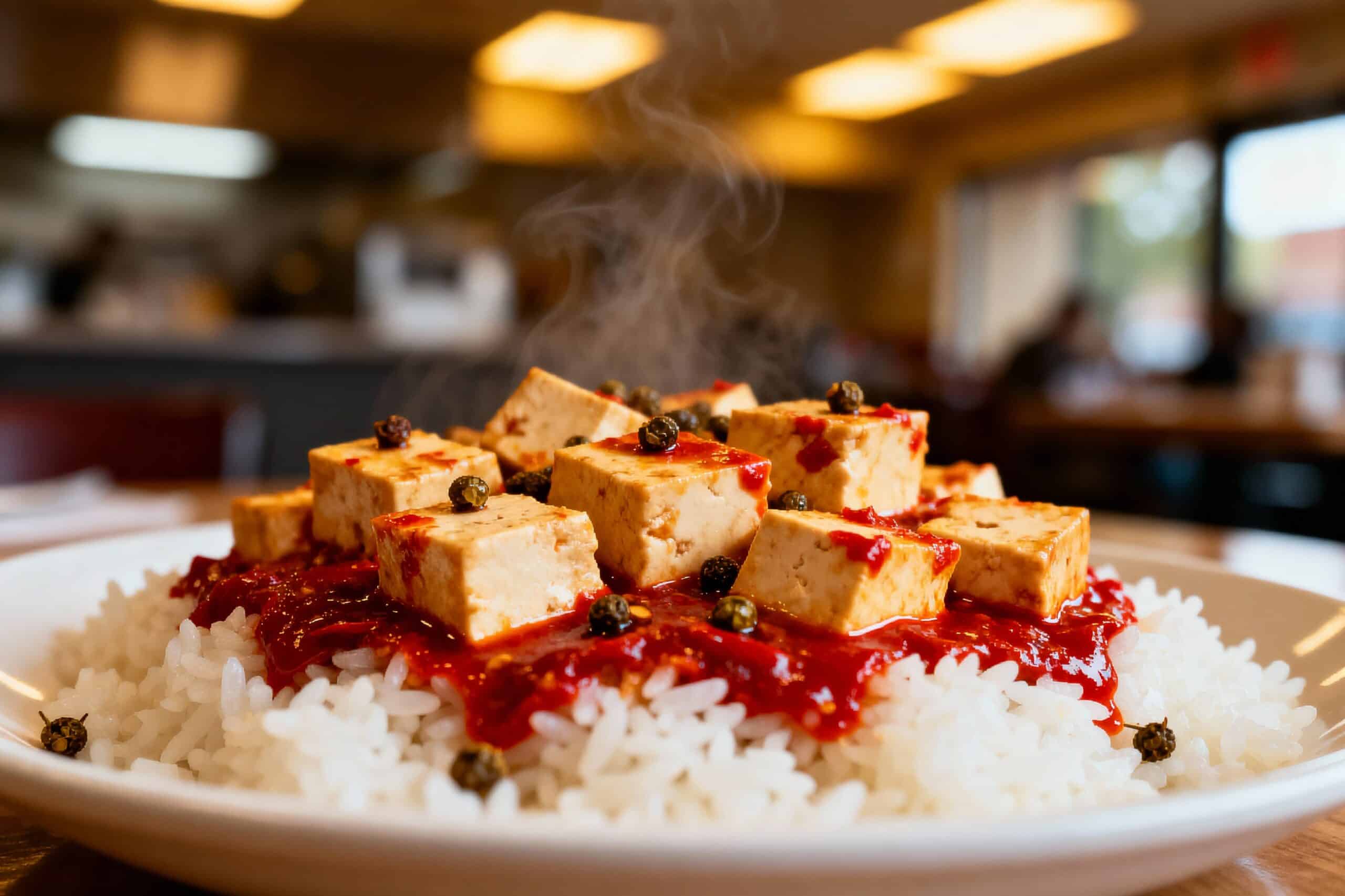
Discover why food lovers worldwide consider mapo tofu traditional dish the perfect comfort meal that naturally combines simple cooking with bold flavors. This complete guide reveals the authentic history behind this famous Sichuan recipe, shows you how to source the right ingredients, and provides step-by-step instructions that guarantee restaurant-quality results in your own kitchen.
What makes Mapo tofu the ultimate traditional dish?
Mapo tofu traditional dish stands out as the ultimate comfort food because it perfectly balances five distinct flavor elements in one bowl. This Sichuan masterpiece combines spicy heat, mouth-numbing sensation, aromatic fragrance, tender texture, and satisfying warmth that creates an unforgettable eating experience.
The dish achieves its legendary status through the complex interplay of doubanjiang chili bean paste and Sichuan peppercorns. These two key ingredients work together to create what locals call « mala » – a sensation that makes your tongue tingle while delivering layers of savory depth.
What sets this dish apart from other tofu preparations is its ability to transform simple ingredients into something extraordinary. The silky tofu absorbs the bold flavors while maintaining its delicate texture. Each bite delivers a different intensity, keeping your palate engaged from start to finish.
The versatility of mapo tofu also contributes to its ultimate appeal. You can enjoy it as a quick weeknight dinner over steamed rice, or elevate it for special occasions. The dish adapts to different dietary needs while maintaining its authentic character.
Mapo tofu traditional dish: history, ingredients, and authenticity
The origins of this beloved dish trace back to Chengdu in the Qing Dynasty, where a pockmarked grandmother (ma po) served this spicy creation at her small restaurant. Her recipe became so popular that locals named the dish after her distinctive appearance.
Authentic mapo tofu traditional dish relies on specific Sichuan ingredients that create its signature taste profile. The foundation starts with Pixian doubanjiang, a fermented broad bean paste that provides both saltiness and deep umami flavors.
Traditional preparation methods emphasize the importance of layering flavors through careful timing. Cooks first bloom the aromatics in oil, then build the sauce gradually to achieve the proper consistency and heat level.
The dish gained widespread recognition beyond Sichuan province during the mid-20th century. Food enthusiasts began adapting the recipe for home kitchens, though purists argue that only versions using proper Sichuan ingredients can claim authenticity.
Mapo tofu traditional dish variant: beef vs pork in historical recipes
Historical evidence from the 1950s reveals that minced beef was the original protein choice in classic mapo tofu recipes. The « Famous Recipes of China » from 1958 specifically called for lean beef, particularly cuts from the shin area.
Beef shin was preferred because it rendered flavorful oil while maintaining a tender texture after cooking. Traditional cooks would slowly fry the minced beef until crispy, creating a foundation of rich, meaty flavor that pork couldn’t quite replicate.
The shift toward pork occurred gradually as availability and cost factors influenced home cooks. Pork became more accessible in many regions, leading to widespread adoption despite being less authentic to the original recipe.
Today, both proteins appear in legitimate versions of the dish. Beef delivers a more intense, slightly gamey flavor that pairs beautifully with Sichuan peppercorns, while pork offers a milder taste that appeals to broader palates.
Mapo tofu traditional dish variant: vegan adaptations and substitute ingredients
Modern vegan adaptations successfully capture the essence of traditional mapo tofu by focusing on umami-rich substitutes. Dried shiitake mushrooms provide the meaty texture and savory depth that plant-based versions require.
The key to successful vegan versions lies in building layers of flavor through fermented ingredients. Mushroom soaking liquid, fermented black beans, and quality soy sauce work together to replace the richness typically provided by meat.
Some innovative cooks use crumbled extra-firm tofu or textured vegetable protein to mimic the original meat component. These ingredients absorb the spicy sauce while providing satisfying texture contrast against the silky main tofu.
The beauty of vegan mapo tofu is that it maintains the dish’s core appeal – the interplay between soft tofu and bold Sichuan flavors. Many people can’t distinguish well-prepared vegan versions from meat-based originals.
Key ingredients and sourcing
Success with mapo tofu depends heavily on sourcing quality Sichuan ingredients that deliver authentic flavors. The most critical component is Pixian doubanjiang, which provides the dish’s characteristic red color and fermented complexity.
Fresh Sichuan peppercorns make a dramatic difference in the final result. These should feel slightly soft when pressed and release a strong citrusy aroma. Avoid pre-ground versions, as they lose their numbing potency quickly.
For the tofu component, soft or medium-firm varieties work best because they hold their shape while absorbing flavors. Silken tofu creates an authentic texture but requires gentle handling during cooking to prevent breaking apart.
Chinese markets offer the widest selection of authentic ingredients, though online retailers now stock quality options. We recommend starting with these essential items:
- Pixian doubanjiang (fermented broad bean chili paste)
- Whole Sichuan peppercorns
- Shaoxing rice wine
- Chinese chili oil with sediment
- Light soy sauce (preferably Chinese brands)
- Fermented black beans (douchi)
Quality chili powders enhance the heat level without overwhelming other flavors. Korean gochugaru or custom toasted chili blends provide excellent alternatives to traditional Sichuan varieties when properly sourced options aren’t available.
The stock base traditionally uses pork and beef bones to create a rich, gelatinous liquid. Store-bought versions work acceptably, though homemade stock elevates the dish significantly.
Recipe
Ingredients you need for the recipe
This authentic recipe serves four people as a main course with steamed rice. The ingredient proportions create the proper flavor balance that defines traditional mapo tofu.
- 1 pound soft tofu, cut into 3/4-inch cubes
- 4 ounces ground beef (preferably from shin)
- 2 tablespoons Pixian doubanjiang
- 1 teaspoon ground Sichuan peppercorns
- 2 cloves garlic, minced
- 1 tablespoon fresh ginger, minced
- 2 tablespoons Shaoxing rice wine
- 1 cup chicken or beef stock
- 2 tablespoons light soy sauce
- 1 tablespoon chili oil
- 2 teaspoons cornstarch mixed with 2 tablespoons water
- 3 green scallions, chopped
- 2 tablespoons vegetable oil
Step-by-step method to make Mapo tofu
The cooking process requires attention to timing and temperature control. Each step builds flavor layers that combine into the final complex taste profile that makes this dish special.
- Heat vegetable oil in a wok or large skillet over medium-high heat
- Add ground beef and cook until crispy and rendered, about 5 minutes
- Push meat to one side, add doubanjiang to empty space and fry for 30 seconds
- Add garlic and ginger, stir everything together for 1 minute
- Pour in Shaoxing wine to deglaze the pan
- Add stock and soy sauce, bring to a gentle simmer
- Carefully add tofu cubes, simmer for 3-4 minutes without stirring
- Stir cornstarch slurry and add to thicken sauce
- Sprinkle ground Sichuan peppercorns over the surface
- Garnish with chopped scallions and drizzle with chili oil
- Serve immediately while hot over steamed rice
The final dish should have a glossy, slightly thick sauce that coats the tofu without being gloppy. The ground Sichuan peppercorns provide the signature numbing sensation that builds with each bite.
We advise tasting and adjusting the spice level before serving, as peppercorn potency varies. Start with 1/4 teaspoon and add more if needed to achieve the desired mouth-tingling effect.
FAQ
Is Mapo Tofu a traditional Chinese dish?
Mapo Tofu is a traditional Chinese dish originating from Sichuan province. It is renowned for its spicy and complex flavor profile, which showcases the region’s culinary traditions, incorporating Sichuan peppercorns and chili bean paste to create its distinctive taste.
What is the traditional meat for Mapo Tofu?
The traditional meat for Mapo Tofu is minced beef, specifically lean cuts from the shin area. This choice provides a rich, flavorful base that enhances the dish’s overall savory depth while ensuring it remains authentic to historical recipes.
What is a classic Sichuan dish made with bean curd?
A classic Sichuan dish made with bean curd is Mapo Tofu. This dish features soft tofu cooked in a spicy sauce with minced meat, typically beef, and is characterized by its numbing sensation, rich flavors, and distinct ingredients that define Sichuan cuisine.
What is the origin of Mapo Tofu?
The origin of Mapo Tofu dates back to Chengdu, China, during the 1860s or 1870s in the Qing Dynasty. The dish was created by a pockmarked woman who served it in her restaurant, leading to its name, which is derived from her appearance— »ma » meaning pockmarks and « po » meaning old woman.
How can Mapo Tofu be made vegan?
Mapo Tofu can be made vegan by using umami-rich substitutes such as dried shiitake mushrooms and textured vegetable protein. These ingredients mimic the meaty texture, while fermented elements like black beans and mushroom soaking liquid replace the richness typically provided by meat.
What key ingredients are essential for authentic Mapo Tofu?
Key ingredients essential for authentic Mapo Tofu include Pixian doubanjiang, fresh Sichuan peppercorns, and medium-firm tofu. These ingredients create the dish’s signature flavor profile, offering an authentic taste of the traditional Sichuan cuisine it represents.

John Smith is a culinary enthusiast and food blogger who discovered his love for Asian cuisine during his years living in Seoul and Tokyo. With a background in journalism, he brings a storytelling approach to exploring the cultural significance behind every dish. John is passionate about making Asian cooking accessible to home cooks and sharing the vibrant food scenes he encounters in his travels.


