
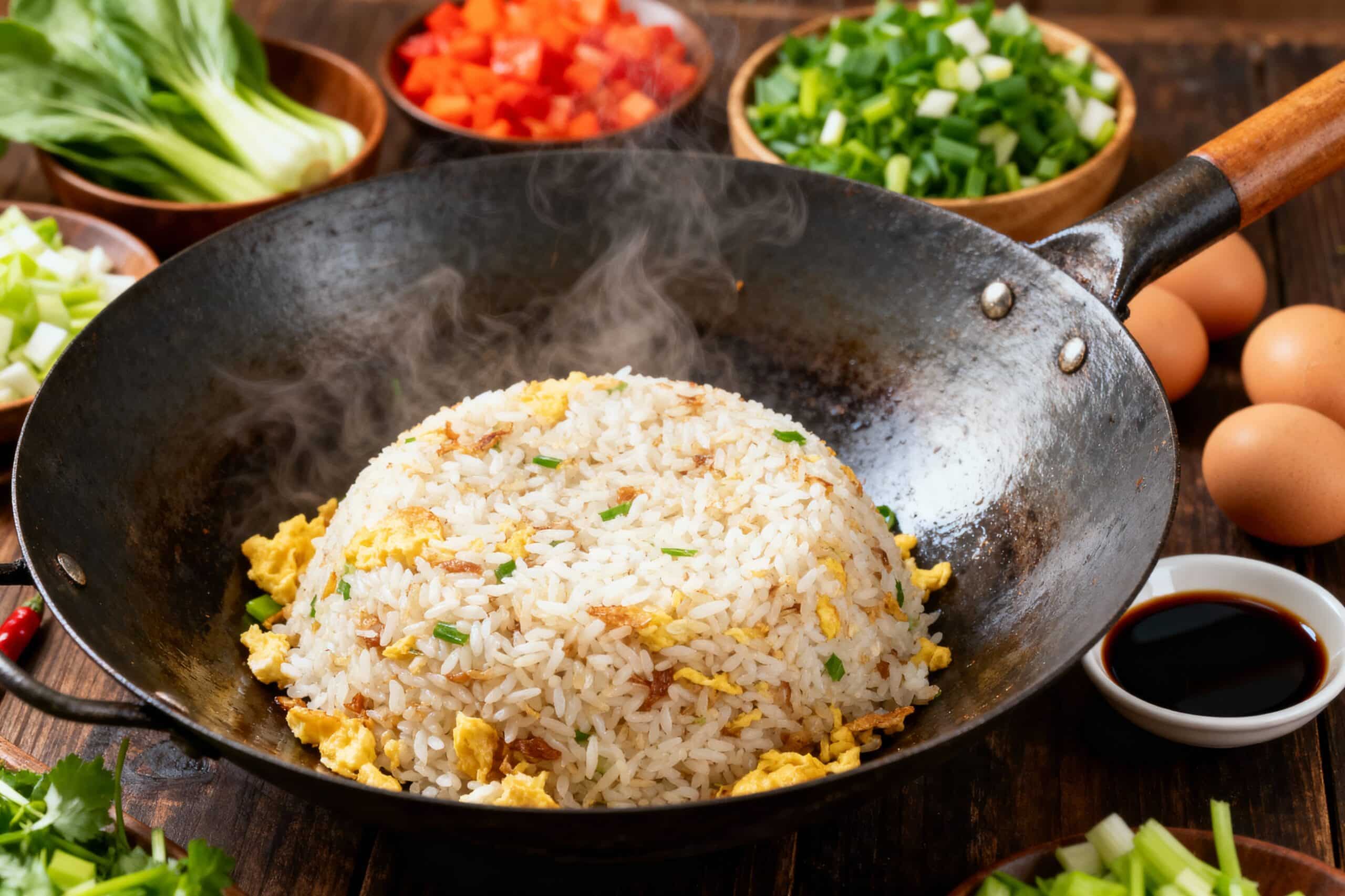
Ever wonder why your homemade fried rice never tastes as good as your favorite restaurant’s? This guide reveals the professional secrets that transform ordinary leftover rice into amazing classic chinese fried rice that naturally rivals any takeout kitchen. You’ll discover the exact ingredients, timing tricks, and temperature techniques that chefs use to create that perfect texture and bold flavor every single time.
What makes fried rice taste like a chef?
The secret behind restaurant-quality fried rice lies in understanding proper technique and timing. Professional chefs know that achieving that signature « wok hei » – the breath of the wok – requires extremely high heat that home stoves often struggle to reach. This intense heat creates those slightly charred, smoky flavors that make restaurant fried rice so distinctive.
Temperature control separates amateur attempts from professional results. Chefs heat their woks until they’re almost smoking before adding oil, ensuring each grain of rice gets properly seared rather than steamed. The constant motion and quick cooking time prevent ingredients from becoming soggy or overcooked.
Professional kitchens also understand the importance of ingredient preparation. Everything must be chopped, measured, and ready before cooking begins. This mise en place approach allows chefs to work quickly without pausing, maintaining that crucial high heat throughout the entire cooking process.
Classic chinese fried rice
Classic chinese fried rice represents one of China’s most beloved comfort foods, transforming leftover rice into a flavorful, satisfying meal. This dish emphasizes using day-old cooked rice that has been thoroughly chilled to prevent clumping and achieve the ideal texture that restaurants are famous for.
The beauty of this traditional recipe lies in its simplicity and versatility. While ingredients may vary by region, the fundamental technique remains consistent: high heat, quick cooking, and properly prepared rice form the foundation of authentic Chinese fried rice.
Ingredients for classic chinese fried rice
Gathering the right ingredients makes all the difference in achieving authentic flavors. We recommend using jasmine rice for its aromatic qualities and fluffy texture, though basmati serves as an acceptable alternative.
- 3 cups day-old cooked jasmine rice, chilled
- 3 large eggs, beaten
- 2 tablespoons vegetable or canola oil
- 1 tablespoon butter
- 1/2 cup diced onion
- 1/2 cup diced carrots
- 1/2 cup frozen peas
- 3 scallions, chopped (white and green parts separated)
- 2-3 tablespoons low-sodium soy sauce
- 1 tablespoon oyster sauce
- 1 teaspoon toasted sesame oil
- 1/4 teaspoon white pepper
- Salt to taste
Step-by-step recipe for classic chinese fried rice
Preparation speed matters when making fried rice. We advise loosening rice grains with a fork before cooking to ensure proper separation during the stir-frying process.
- Heat wok or large skillet over high heat until extremely hot
- Add 1 tablespoon oil and swirl to coat
- Pour in beaten eggs and scramble quickly, then remove and set aside
- Add remaining oil and butter to the hot pan
- Add onions and carrots, stir-fry for 1-2 minutes
- Add chilled rice, breaking up clumps with spatula
- Stir-fry rice for 3-4 minutes, allowing slight browning
- Add peas and white parts of scallions
- Return scrambled eggs to pan, mixing gently
- Add soy sauce, oyster sauce, and seasonings
- Finish with sesame oil and green scallions
- Serve immediately while hot
Key tips for achieving restaurant-worthy texture
Texture separates mediocre fried rice from exceptional dishes. The rice should be dry and firm with individual grains that don’t clump together. Day-old rice that’s been refrigerated overnight works best because it loses moisture, creating the perfect foundation for stir-frying.
Freshly cooked rice contains too much moisture and will create a mushy, unappetizing result. We recommend spreading newly cooked rice on a sheet pan and refrigerating it for at least four hours before using it for fried rice.
Heat management plays a crucial role in texture development. Your wok or skillet should be hot enough that a drop of water sizzles and evaporates instantly. This intense heat prevents steaming and promotes the slight browning that gives fried rice its characteristic texture and flavor.
Constant movement prevents sticking and ensures even cooking. Professional chefs never stop stirring and tossing the rice, creating that signature restaurant texture that’s impossible to achieve with low heat or infrequent stirring.
Rice and flavor: choosing the right base and seasonings
Rice selection impacts both texture and flavor significantly. Jasmine rice remains the preferred choice for its natural aroma and ability to maintain separate grains when properly prepared. This long-grain variety absorbs flavors well while retaining its structure during high-heat cooking.
Seasoning balance requires careful attention to avoid over-salting. We advise adding soy sauce and oyster sauce gradually, tasting as you progress. Low-sodium soy sauce gives you better control over salt levels while still providing that essential umami depth.
The combination of soy sauce, oyster sauce, and sesame oil creates the classic flavor profile associated with Chinese fried rice. White pepper adds subtle heat without overwhelming other flavors, while sesame oil provides aromatic finishing notes that shouldn’t be added too early in the cooking process.
Timing matters when adding seasonings. Soy sauce should be added when the rice is nearly finished cooking, allowing it to coat the grains without burning. Sesame oil goes in at the very end to preserve its delicate flavor and aroma.
Variations and serving ideas
Protein additions transform basic fried rice into a complete meal. Cooked shrimp, diced chicken, or Chinese barbecue pork integrate beautifully when added during the final minutes of cooking. We recommend cooking proteins separately first, then incorporating them to avoid overcooking.
Vegetarian options include firm tofu, additional vegetables, or even creative additions like pineapple for a sweet twist. Kimchi fried rice has gained popularity, adding fermented flavors that complement the traditional seasoning profile.
Serving suggestions extend beyond the traditional bowl presentation. Fried rice pairs excellently with simple stir-fried vegetables, egg rolls, or hot and sour soup for a complete Chinese meal experience.
Storage and reheating maintain quality when done properly. Leftover fried rice keeps in the refrigerator for up to four days and reheats well in a hot wok with a splash of oil. Microwave reheating works but won’t restore the original texture that makes this dish special.
Frequently Asked Questions
What is the secret to Chinese fried rice?
The secret to Chinese fried rice lies in technique and timing. Professional chefs use high heat during cooking to create a charred flavor known as « wok hei. » This technique requires constant stirring to prevent sogginess and achieve a perfectly seared texture.
What gives Chinese fried rice its flavour?
Chinese fried rice gets its flavour from a combination of seasonings like soy sauce, oyster sauce, sesame oil, and white pepper. These ingredients create the dish’s iconic taste, while using day-old, chilled rice ensures that each grain absorbs the flavours without becoming mushy.
What goes in a classic fried rice?
A classic fried rice typically includes day-old cooked rice, scrambled eggs, diced onions, carrots, peas, scallions, soy sauce, and optional proteins like chicken or shrimp. The combination of these ingredients offers a balance of textures and flavours central to this popular dish.
What are the main ingredients in classic Chinese fried rice?
The main ingredients in classic Chinese fried rice include day-old cooked jasmine rice, eggs, soy sauce, sesame oil, onions, carrots, peas, and scallions. Optional ingredients can include oyster sauce and proteins like chicken or pork for added flavour and nutrition.
How do you achieve restaurant-quality fried rice at home?
To achieve restaurant-quality fried rice at home, preheat your wok or skillet to high temperatures before adding ingredients. Use day-old rice, ensure veggies are chopped and ready, and maintain constant motion while cooking to prevent sogginess and create a distinctively tasty texture.
What is the best type of rice for fried rice?
The best type of rice for fried rice is jasmine rice due to its aromatic properties and fluffy texture. This long-grain rice retains individual grains when stir-fried, making it ideal for achieving a perfect fried rice dish with excellent flavour absorption.

John Smith is a culinary enthusiast and food blogger who discovered his love for Asian cuisine during his years living in Seoul and Tokyo. With a background in journalism, he brings a storytelling approach to exploring the cultural significance behind every dish. John is passionate about making Asian cooking accessible to home cooks and sharing the vibrant food scenes he encounters in his travels.


