
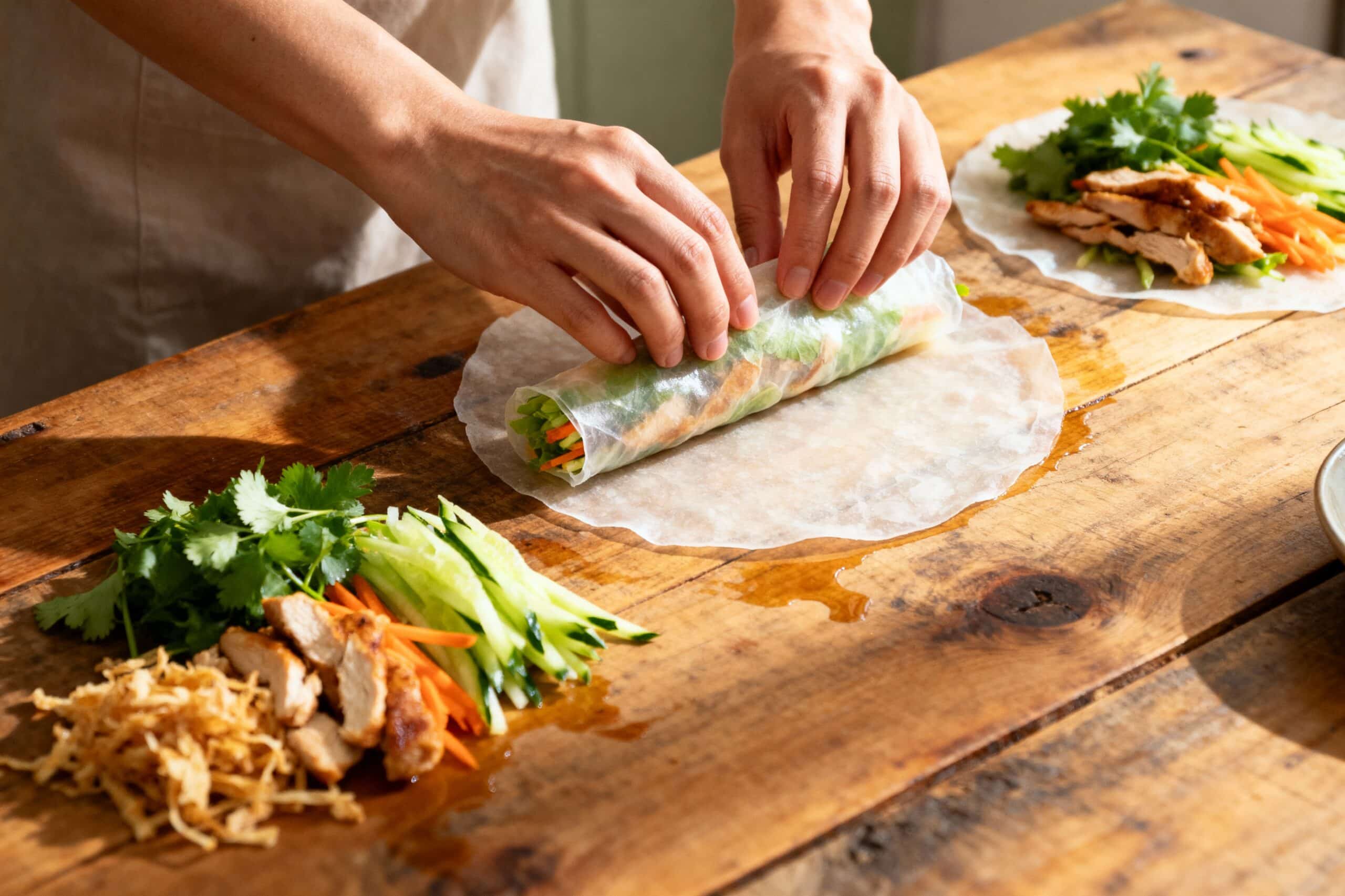
Craving fresh, healthy rolls but tired of expensive takeout? Creating spring rolls homemade naturally saves money while letting you control every ingredient that goes into your meal. This complete guide reveals the exact techniques, ingredient ratios, and storage secrets that turn beginners into confident roll-makers, plus you’ll discover which wrapper types work best and how to avoid common mistakes that make rolls fall apart.
How can you make delicious spring rolls at home easily?
Making spring rolls homemade is surprisingly simple when you organize your ingredients and master a few key techniques. The secret lies in proper preparation, choosing the right wrapper-to-filling ratio, and keeping your workspace damp to prevent sticking. With rice paper wrappers needing only a 3-second dip in warm water and basic rolling skills, anyone can create restaurant-quality spring rolls in their kitchen.
The beauty of homemade spring rolls comes from controlling every element – from the crispness of your vegetables to the perfect balance of flavors. Unlike store-bought versions, you can customize fillings to match your taste preferences and dietary needs.
Spring rolls homemade
Creating spring rolls homemade opens up endless possibilities for fresh, healthy meals that satisfy both your taste buds and nutritional goals. These versatile wraps work equally well as appetizers, light lunches, or party snacks that impress guests without breaking your budget.
The process becomes enjoyable once you understand that spring rolls come in two main varieties: fresh (using rice paper) and fried (using wheat flour wrappers). Fresh spring rolls showcase raw ingredients and herbs, while fried versions deliver that satisfying crunch we all crave. Both styles share similar filling principles but require different handling approaches.
We recommend starting with fresh spring rolls since they’re more forgiving and don’t require oil temperature monitoring. Plus, you can taste your fillings as you go and adjust seasonings before committing to the final wrap.
Wrappers and fillings: choosing the right textures
Success with spring rolls depends heavily on selecting wrappers that match your cooking method. Rice paper wrappers work beautifully for fresh rolls but can tear easily when oversoaked. Wheat flour wrappers handle frying better and provide that classic crispy exterior most people associate with restaurant spring rolls.
Standard 21.5cm squares produce rolls about 4-5 inches long – perfect for individual servings. The key is working with wrappers at the right moisture level: pliable enough to fold without cracking, but not so wet that they become mushy and difficult to handle.
Filling ideas for texture and balance
Great spring roll fillings combine crunchy and tender elements in every bite. Think shredded carrots and cabbage for crunch, paired with soft lettuce leaves and fresh herbs like basil, mint, and cilantro. This contrast keeps each bite interesting and prevents the rolls from feeling one-dimensional.
Popular protein additions include cooked shrimp, pork, or chicken that’s been cooled completely. Rice vermicelli noodles add substance without overwhelming other flavors. Bean sprouts contribute a satisfying snap, while thinly sliced mushrooms provide an earthy depth.
- Crunchy elements: shredded carrots, cabbage, jicama, bean sprouts
- Tender components: lettuce leaves, cooked proteins, rice noodles
- Fresh herbs: basil, mint, cilantro, Thai basil
- Texture boosters: cucumber strips, bell pepper slices
Moisture control becomes crucial here. Always drain cooked ingredients thoroughly and pat vegetables dry before assembly. Excess water leads to soggy rolls that fall apart during eating or burst during frying.
Wrapping and handling tips
Setting up your workspace properly makes rolling spring rolls feel almost effortless. Work on a damp, non-porous surface like a large plate or cutting board. Keep a bowl of warm water nearby for softening wrappers, plus clean kitchen towels for wiping hands.
Place fillings on the third of the wrapper closest to you, leaving about an inch border on the sides. Start with lettuce or herbs (they won’t tear the wrapper), then add proteins and crunchy vegetables. Keep portions modest – about 1/3 cup total filling per roll prevents overstuffing.
The rolling technique follows a simple pattern: fold the bottom edge over the filling, tuck it under slightly, fold in the sides, then roll firmly toward the top. Keep steady pressure to maintain a tight roll that won’t unravel when sliced or eaten.
Spring rolls recipe: ingredients and step-by-step
This basic recipe yields 18 spring rolls – perfect for a family meal or small gathering. The beauty lies in its flexibility; swap ingredients based on what’s available in your refrigerator or personal preferences.
Spring rolls recipe ingredients
- 18 rice paper wrappers (8-inch diameter)
- 2 cups cooked shrimp or chicken, chopped
- 4 oz rice vermicelli, cooked and cooled
- 2 cups mixed lettuce leaves
- 1 cup shredded carrots
- 1 cup thinly sliced cabbage
- 1/2 cup fresh mint leaves
- 1/2 cup fresh cilantro
- 1/2 cup fresh basil leaves
- 1 cucumber, julienned
Step-by-step instructions for homemade spring rolls
Preparation makes the actual rolling process smooth and enjoyable. Start by organizing all fillings in separate bowls, ensuring everything is at room temperature and properly drained.
- Fill a large bowl with warm water for softening wrappers
- Dip one rice paper wrapper for exactly 3 seconds
- Place wrapper on damp work surface
- Layer lettuce leaves on bottom third of wrapper
- Add 2-3 tablespoons protein, noodles, and vegetables
- Top with 3-4 herb leaves
- Fold bottom edge over filling, tuck slightly under
- Fold in left and right sides
- Roll tightly toward top edge
- Place seam-side down on serving plate
- Cover with damp paper towel to prevent drying
Work with one wrapper at a time to prevent them from becoming too soft. If a wrapper tears, simply place another one underneath and continue – the double layer actually provides extra strength.
Dipping sauces and serving ideas
The right dipping sauce transforms good spring rolls into memorable ones. Peanut sauce remains the classic choice, but don’t overlook sweet chili sauce or Vietnamese fish sauce-based dips that add complexity without overwhelming delicate flavors.
For peanut sauce, blend smooth peanut butter with rice vinegar, soy sauce, honey, and a touch of sriracha. Thin with warm water until you reach a consistency that coats but doesn’t overpower the rolls. Sweet chili sauce works straight from the bottle, though adding fresh lime juice brightens the flavor considerably.
Presentation matters when serving spring rolls. Arrange them seam-side down on a platter, leaving space between each roll so they don’t stick together. Garnish with extra herbs and lime wedges. Small individual dipping bowls prevent double-dipping and keep sauces from getting watery.
We suggest preparing sauces several hours ahead – flavors meld beautifully and save you last-minute preparation stress. Room temperature sauces complement fresh spring rolls better than cold ones straight from the refrigerator.
Make ahead, storage and leftovers
Fresh spring rolls taste best within a few hours of making, but proper storage extends their life to 1-2 days in the refrigerator. Wrap each roll individually in plastic wrap, or place them in an airtight container with damp paper towels to maintain wrapper flexibility.
For longer storage, consider freezing assembled but unfried spring rolls for up to 2 months. Lay them on a baking sheet until solid, then transfer to freezer bags. Fry directly from frozen, adding an extra minute to cooking time.
Leftover fillings keep for several days refrigerated and work beautifully in salads, grain bowls, or as sandwich ingredients. Cooked proteins stay fresh for 3-4 days, while raw vegetables should be used within 2 days for optimal crispness.
We recommend avoiding refrigeration for rice paper-based fresh rolls beyond two days, as the wrappers become tough and chewy. Plan quantities accordingly, or prepare extra fillings for quick assembly of new rolls rather than storing completed ones.
FAQ
Is it better to fry or bake spring rolls?
The answer to whether it’s better to fry or bake spring rolls often depends on personal preference. Frying produces a crunchier texture, while baking offers a healthier alternative with less oil, resulting in a softer roll. Choosing the method affects flavor and texture characteristics significantly.
What ingredients are used in spring rolls?
The ingredients used in spring rolls typically include rice paper wrappers, protein options like cooked shrimp or chicken, rice vermicelli, fresh vegetables like lettuce, carrots, and cabbage, and fresh herbs such as mint and cilantro. These create a flavorful and crunchy wrap.
What to put in homemade spring rolls?
In homemade spring rolls, you can put a variety of ingredients such as rice paper wrappers, cooked proteins (shrimp, chicken), rice vermicelli noodles, fresh vegetables (lettuce, carrots), and herbs (mint, cilantro). Experimenting with flavors ensures a delicious result tailored to your taste!
What are some common mistakes when making spring rolls?
Some common mistakes when making spring rolls include oversoaking the rice paper wrappers, overstuffing with fillings, and not thoroughly draining cooked ingredients. These errors can lead to soggy, difficult-to-roll spring rolls. Proper moisture control is crucial for success.
How do you make fresh homemade spring rolls?
To make fresh homemade spring rolls, you soak rice paper wrappers in warm water until pliable, then layer fillings like cooked shrimp, rice noodles, fresh vegetables, and herbs. Fold in the sides and tightly roll them. Serve with dipping sauces to elevate the flavors.
How can you ensure the right texture in your spring rolls?
To ensure the right texture in your spring rolls, balance crunchy and tender fillings. Use shredded vegetables and crisp herbs for crunch, alongside softened proteins and rice noodles. Proper moisture control and gentle handling during rolling help maintain the desired texture.

John Smith is a culinary enthusiast and food blogger who discovered his love for Asian cuisine during his years living in Seoul and Tokyo. With a background in journalism, he brings a storytelling approach to exploring the cultural significance behind every dish. John is passionate about making Asian cooking accessible to home cooks and sharing the vibrant food scenes he encounters in his travels.


