
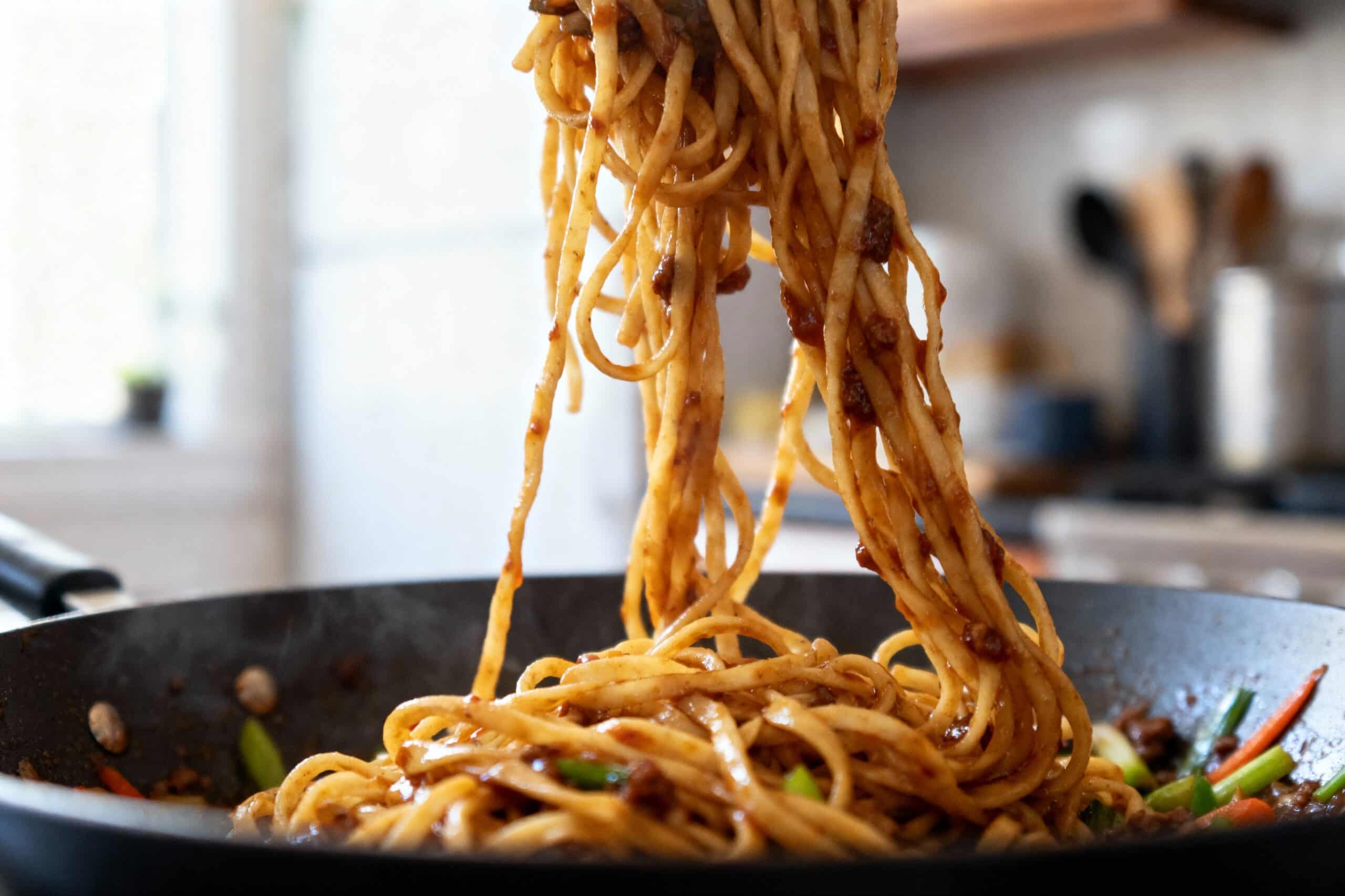
Craving restaurant-quality Chinese takeout but want to skip the delivery fees and long wait times? You can naturally transform simple pantry ingredients into silky, flavorful lo mein noodles homemade faster than ordering out. This complete guide reveals professional kitchen shortcuts, foolproof sauce ratios, and time-saving techniques that deliver authentic taste and texture in your own kitchen.
How can you make lo mein noodles homemade in 20 minutes?
Making lo mein noodles homemade in just 20 minutes is totally doable when you have the right plan and ingredients ready. The secret lies in smart prep work and using quick-cooking techniques that restaurant chefs rely on every day.
You can create delicious homemade lo mein by either making fresh noodles from scratch or using store-bought alternatives like dried egg noodles or even ramen noodles. Fresh noodles take about 45-60 seconds to cook, while dried versions need 2-3 minutes in boiling water.
lo mein noodles homemade
When making noodles from scratch, the process becomes surprisingly fast with proper technique. Fresh egg noodles give you that authentic chewy texture that makes lo mein special.
The key to speed lies in having everything measured and ready before you start cooking. This approach, called mise en place by professional chefs, cuts your actual cooking time down to about 8 minutes once everything hits the pan.
ingredients for lo mein noodles homemade
For homemade noodles, you’ll need simple pantry staples that pack a punch:
- 2 cups all-purpose flour or bread flour (bread flour works better for texture)
- 3 large eggs
- 1 teaspoon salt
- 2 tablespoons cornstarch for dusting
- 3 tablespoons soy sauce
- 2 tablespoons oyster sauce
- 1 tablespoon honey or sugar
- 1 teaspoon fresh ginger, minced
- 2 tablespoons vegetable oil
Bread flour contains higher protein content than regular flour, which gives your noodles that perfect chewy bite. The eggs add elasticity and richness that makes homemade noodles worth the extra effort.
equipment and timing to make lo mein noodles at home
Having the right tools makes all the difference in hitting that 20-minute target. A stand mixer with pasta attachments speeds up the process significantly compared to rolling by hand.
You’ll need a large pot for boiling water, a wok or large skillet for stir-frying, and either a pasta roller or rolling pin for flattening dough. Sharp knives or noodle cutter attachments help create uniform strands.
Timing breaks down like this: 5 minutes for mixing dough, 8 minutes for rolling and cutting, 2 minutes for boiling, and 5 minutes for stir-frying. This leaves you with perfectly cooked lo mein noodles homemade right on schedule.
What kind of noodles to use for lo mein?
Traditional lo mein uses fresh egg noodles that are about 3mm thick, roughly the width of fettuccine. These noodles have enough substance to hold up to vigorous stir-frying without breaking apart.
Store-bought alternatives work great when you’re short on time. Fresh egg noodles from the refrigerated section of your grocery store are ideal substitutes. Look for packages labeled simply as « egg noodles » rather than pasta varieties.
Dried ramen noodles (without the seasoning packet) make excellent quick substitutes. Spaghetti or fettuccine also work in a pinch, though they won’t have quite the same chewy texture as authentic egg noodles.
The thickness matters more than you might think. Thin noodles like angel hair break easily during stir-frying, while overly thick noodles don’t absorb flavors well. Aim for noodles that are substantial but not heavy.
Lo mein sauce: components and how to balance flavors
The sauce makes or breaks your lo mein dish. Getting the balance right between salty, sweet, and savory elements creates that restaurant-quality taste at home.
Start with soy sauce as your base – it provides the essential umami flavor that defines lo mein. Low-sodium versions give you better control over saltiness, especially when combined with oyster sauce.
Oyster sauce adds depth and slight sweetness, while honey or sugar balances the saltiness. Fresh ginger brings warmth and complexity that dried spices can’t match.
Water or chicken broth thins the sauce to the right consistency. The mixture should coat noodles without being too thick or watery. We advise tasting as you go and adjusting each component until the flavors sing together.
Step-by-step recipe
Step 1: prep and boil the noodles
Get your water boiling first – this saves precious minutes while you prep other ingredients. Use a large pot with lightly salted water to prevent noodles from sticking together.
If making fresh noodles, roll your dough to level 3 thickness on a pasta machine, then cut into strips. Dust everything with cornstarch to prevent sticking.
Cook fresh noodles for just 45-60 seconds until they float to the surface. Dried noodles need 2-3 minutes until al dente. Drain immediately and rinse with cold water to stop the cooking process.
While noodles cook, prep your vegetables and proteins. Cut everything into similar-sized pieces so they cook evenly. Having everything ready before you start stir-frying is crucial for timing.
Step 2: stir-fry with sauce and finish
Heat your wok or large skillet over high heat until it’s smoking hot. Add oil and swirl to coat the entire surface.
Cook aromatics like scallions and ginger for 30 seconds, then add your hardest vegetables first. Quick-cooking vegetables like spinach and bean sprouts go in last.
Add the cooked noodles and sauce mixture, tossing everything together with chopsticks or wooden spoons. The key is moving fast – everything should be well-coated and heated through in about 2-3 minutes.
Toss vigorously until the sauce is absorbed and everything glistens. Serve immediately while the noodles are still steaming hot.
Tips to speed up and customize
Pre-chopped vegetables from the store cut your prep time significantly. Shredded cabbage, pre-sliced mushrooms, and bagged spinach soften quickly and blend seamlessly into the dish.
Using pre-cooked proteins like rotisserie chicken or frozen shrimp saves both time and effort. Just add them during the last minute of stir-frying to heat through.
Season proteins with some of your sauce mixture before cooking. This builds flavor layers quickly and ensures every bite tastes complete.
Set timers for each cooking phase to stay on track. We recommend keeping vegetables slightly crisp for that traditional « crisp tender » texture that makes lo mein special.
Customize with different protein and vegetable combinations based on what you have available. Beef, pork, tofu, or shrimp all work beautifully with adjusted cooking times.
FAQ
What noodles are best for homemade lo mein?
The best noodles for homemade lo mein are fresh egg noodles, ideally around 3mm thick, resembling fettuccine. These noodles are designed to withstand stir-frying without breaking apart. If fresh noodles are unavailable, look for refrigerated egg noodles or dried ramen as suitable alternatives.
What flour is used for lo mein noodles?
The flour used for lo mein noodles is typically either all-purpose flour or bread flour. Bread flour is preferred due to its higher protein content, which enhances the texture and chewiness of the noodles, making them more authentic compared to those made with all-purpose flour.
Can you use regular pasta noodles for lo mein?
You can use regular pasta noodles for lo mein, though they may not achieve the same chewy texture as traditional lo mein noodles. Fresh egg noodles or ramen noodles are recommended for a better result. If needed, spaghetti or fettuccine can work in a pinch, though results may vary.
What is the secret ingredient in Chinese noodles?
The secret ingredient in Chinese noodles often includes alkaline water, or lye water, which enhances the noodles’ texture and gives them a distinctive chewiness. This ingredient, combined with the right flour and eggs, helps achieve the authentic flavor and texture of traditional noodles.
What ingredients do I need to make homemade lo mein noodles?
To make homemade lo mein noodles, you’ll need all-purpose or bread flour, eggs, salt, and cornstarch. A typical recipe calls for 2 cups of flour, 3 large eggs, 1 teaspoon salt, and 2 tablespoons cornstarch for dusting to prevent stickiness during preparation.
How do you make homemade lo mein noodles from scratch?
To make homemade lo mein noodles from scratch, begin by mixing flour and salt, then adding eggs. Knead the dough until smooth and non-sticky. Roll it out to the desired thickness, cut into strips, and dust with cornstarch before cooking them in boiling water for a few minutes until done.

John Smith is a culinary enthusiast and food blogger who discovered his love for Asian cuisine during his years living in Seoul and Tokyo. With a background in journalism, he brings a storytelling approach to exploring the cultural significance behind every dish. John is passionate about making Asian cooking accessible to home cooks and sharing the vibrant food scenes he encounters in his travels.


