
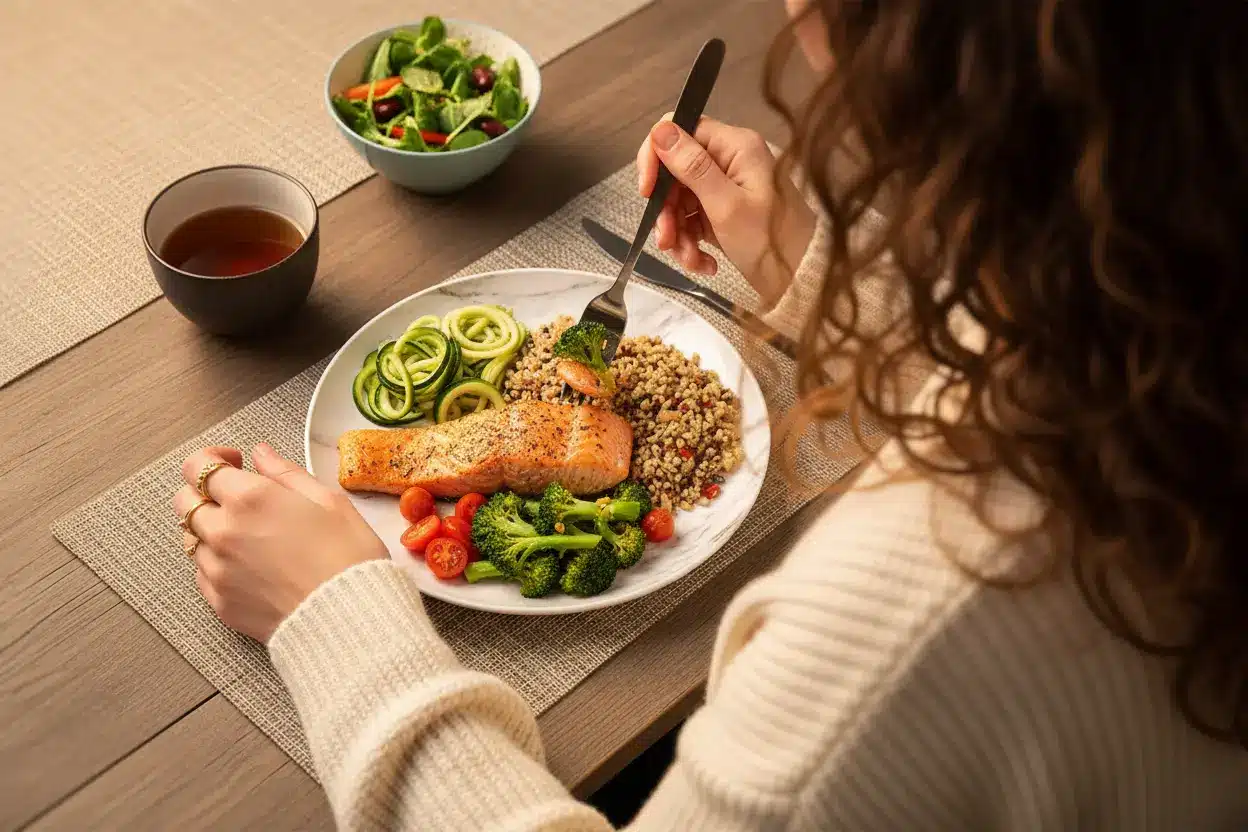
Could living longer and staying healthy really be as simple as what’s on your plate? Grab your fork, because the surprising answer isn’t a fancy superfood or miracle supplement, but something you won’t even need a shopping list for: eating less and eating smarter.
The Old Recipe: Too Much of Everything
If you look around (or maybe in your fridge!), it’s easy to see how we got here. Dr. Christophe de Jaeger, a French gerontologist and researcher specializing in aging, points out an uncomfortable but undeniable truth: we eat too much sugar, salt, and fat, in quantities that are, frankly, hard to justify—unless you’re training for a marathon… every day. All those extra calories don’t just disappear; they’re stored in our fat and cells, and, over time, they gunk up our bodies and set the stage for a variety of health issues.
Caloric Restriction: Not Just a Passing Fad
Don’t go picturing this as yet another restrictive diet. This idea goes way back. Caloric restriction was first described in the early 20th century by physiologist Clive McCay and later developed by Roy Walford, an American doctor and trailblazer in longevity research. Walford demonstrated in his research with rodents that eating just enough to cover caloric needs, with no nutritional deficiencies (proper caloric restriction), allowed for increased lifespan and better health.
In these studies, the rodents that nibbled just enough showed reduced fat mass and a near disappearance of cardiovascular risk factors. In humans, following similar principles, things got spicy (in a good way): blood pressure dropped below 12/7 mmHg, cholesterol levels hit those of a young adult, bad cholesterol plummeted, and blood sugar took a dive.
But—and it’s a big but—physical activity is non-negotiable in this equation. Without it, muscle mass drops before fat does. Several studies confirm the benefits of caloric restriction, but couch potatoes, beware: activity is always part of the longevity secret.
Why Overeating Backfires
How does overindulgence backfire? When our bodies can’t handle the flood of food we’re shoveling in, it gets stashed in fat and across our cells—leading to what Dr. de Jaeger calls “clogging” of the organism. When we cut back on calories (naturally, by eating less, or artificially, with certain medications like Metformin), our cells have to become waste-managing superheroes, handling leftovers and excesses more efficiently. The result? The body scrounges for energy, starting an internal clean-up campaign.
Dr. de Jaeger even likens caloric restriction to a form of ecological management within the body. Your cells don’t get lazy; they actually get resourceful.
The Real-Life Secret Plate
Here’s where many people get confused: caloric restriction isn’t about excluding whole categories of food. It’s about serving your body exactly what it needs—no more, no less—taking into account your individual base metabolism and physical activity. For example, if you’re a lumberjack in the Canadian forest, you might need a whopping 4000 calories per day just to break even. For everyone else, needs differ—so there’s no one-plate-fits-all.
It boils down to:
- Recognizing everyone has a unique metabolism and lifestyle
- Defining individual caloric needs and not exceeding them
- Avoiding nutritional deficiencies
What does a well-balanced calorie-restricted « secret plate » look like? Dr. de Jaeger recommends:
- Much more protein
- Significantly fewer carbohydrates—20-25% of calories rather than the usual 50% (unless you’re training for competition, in which case your body genuinely needs carbs to perform)
- Adjusting your physical activity or carb intake so they work together (strolling around the lake? Few carbs. Training for gold? Carb up!)
And don’t just aim for « fewer calories »—make those calories count. Dr. de Jaeger underscored that real, meaningful physical activity is key (sorry, the famous “10,000 steps a day” isn’t enough to make the cut).
So, what’s the real secret plate for longevity? Eat thoughtfully, not mindlessly. Meet your body’s needs, not your cravings. Get moving, not just wandering. The fork, it turns out, really can be mightier than the sword—or at least the remote control. And with the right approach, your plate could become your personal passport to a longer, healthier life. Bon appétit—just keep those portions in check!

John Smith is a culinary enthusiast and food blogger who discovered his love for Asian cuisine during his years living in Seoul and Tokyo. With a background in journalism, he brings a storytelling approach to exploring the cultural significance behind every dish. John is passionate about making Asian cooking accessible to home cooks and sharing the vibrant food scenes he encounters in his travels.


