
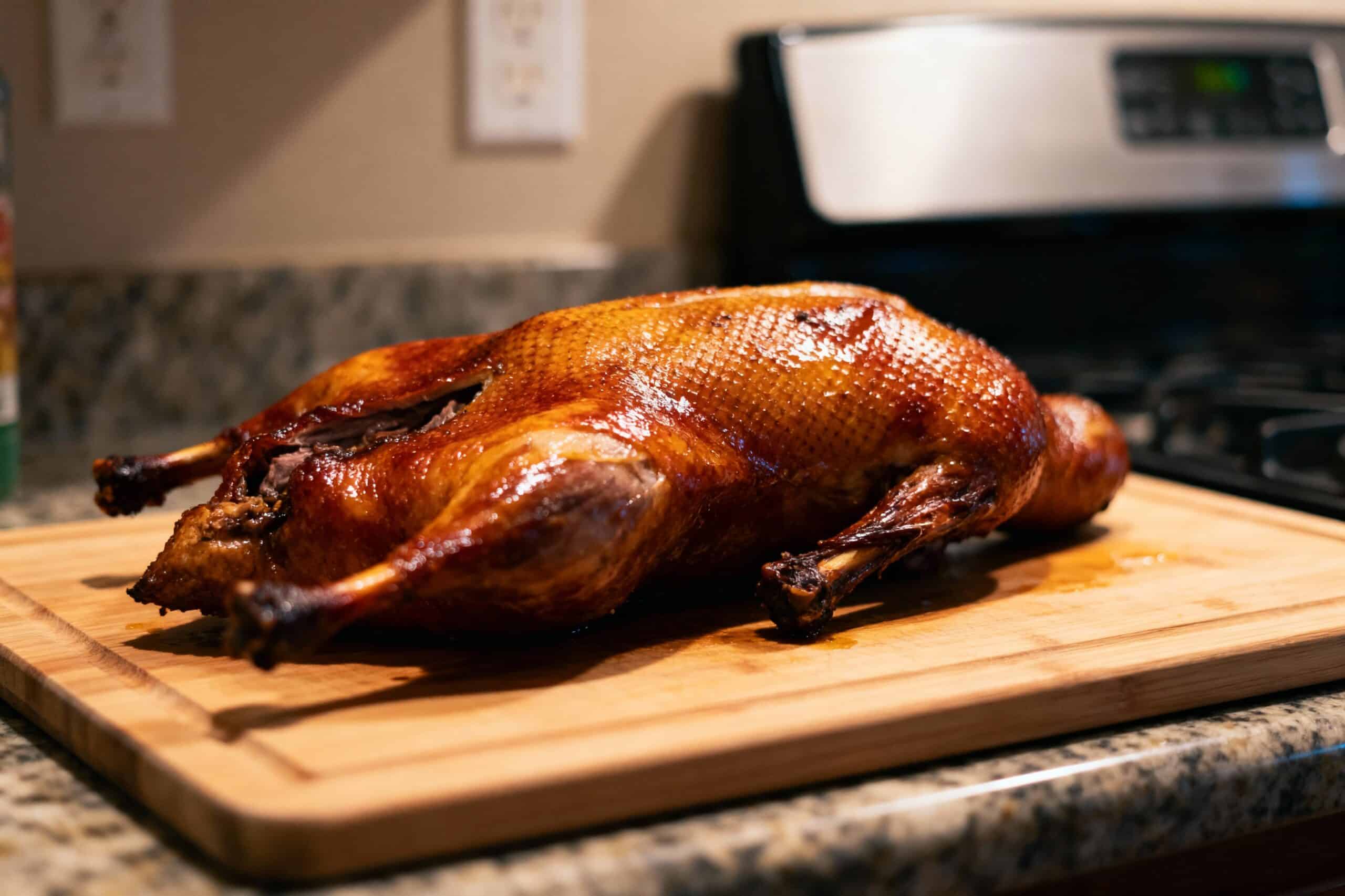
Making restaurant-quality duck at home might seem impossible, but mastering cantonese roast duck traditional techniques naturally transforms your kitchen into a professional cooking space. This complete guide reveals the secrets behind that perfect crispy skin and juicy meat, showing you exactly which tools to buy, ingredients to gather, and step-by-step methods that work in any home oven – plus smart tips for storing and reheating leftovers so nothing goes to waste.
What makes cantonese roast duck traditional in home cooking?
Cantonese roast duck traditional preparation stands out for its distinctive air-drying process and special skin inflation technique that creates the signature crispy exterior. This time-honored method requires hanging the duck head-down for 24 to 48 hours in the refrigerator, allowing the skin to dry completely before roasting.
The traditional approach involves thoroughly cleaning the duck to remove pinfeathers, internal organs, and excess fat while keeping the skin intact. We advise paying special attention to removing the wing tips, as this helps achieve even cooking throughout the bird.
What truly sets this method apart is the air inflation technique between the skin and meat. This process creates an inflated appearance that ensures uniform roasting and helps develop that coveted crispy skin texture. The duck is then sealed tightly with skewers or twine after being filled with aromatic marinades.
The traditional seasoning blend combines salt, five-spice powder, and sand ginger powder, rubbed directly onto the skin. This dry rub sits for 1-2 hours in the refrigerator, further drawing moisture from the skin to enhance crispiness.
Key differences between Cantonese roast duck and Peking duck
While both dishes feature roasted duck, their preparation methods differ significantly. Peking duck focuses primarily on achieving paper-thin, crispy skin that’s served wrapped in pancakes with hoisin sauce and scallions.
Cantonese roast duck takes a different approach by marinating the cavity with a complex mixture of sauces including chee hou, bean sauce, hoisin, and oyster sauce. These flavors penetrate the meat during the lengthy preparation process.
The cooking temperatures also vary between the two styles. Cantonese roast duck typically roasts at 350°F to 400°F, while Peking duck often requires higher initial temperatures. The Cantonese method involves flipping the duck during roasting to ensure even browning on both sides.
Peking duck restaurants use special ovens and wood-fired systems, but Cantonese roast duck adapts well to home ovens. The serving style differs too – Cantonese roast duck gets carved into bite-sized pieces and eaten without pancakes or extensive accompaniments.
Essential equipment and ingredients for Cantonese roast duck
Successfully preparing this dish requires specific tools that make the traditional techniques possible. A large roasting pan with a V-shaped rack becomes essential for proper air circulation around the duck during cooking.
The air inflation process demands an electric air pump with a plastic tube attachment. This specialized equipment helps separate the skin from the meat, creating the characteristic puffed appearance that leads to even cooking.
Sharp tools make preparation safer and more efficient. We recommend having a quality cleaver for carving, skewers or kitchen twine for sealing, and hooks or racks for the hanging process. A reliable meat thermometer ensures the duck reaches the safe internal temperature of 165°F.
Key ingredients include a fresh whole duck, preferably Pekin variety, along with traditional seasonings like five-spice powder, sand ginger powder, and maltose or honey for glazing. The marinade requires fermented bean curd, Shaoxing rice wine, and various aromatics including star anise, cinnamon, and orange peel.
Step-by-step guide to making cantonese roast duck at home
ingredients you’ll need for the dish
Gathering the right ingredients sets the foundation for authentic flavors in your cantonese roast duck traditional recipe. The ingredient list spans both proteins and seasonings that work together during the multi-day preparation process.
- 1 fresh whole duck (4-5 pounds, preferably Pekin)
- 2 tablespoons salt
- 1 tablespoon five-spice powder
- 1 teaspoon sand ginger powder
- 3 tablespoons maltose or honey
- 2 tablespoons soy sauce
- 2 tablespoons hoisin sauce
- 1 tablespoon oyster sauce
- 2 cubes fermented bean curd
- 3 tablespoons Shaoxing rice wine
- 2 tablespoons rice vinegar
- 2 star anise pods
- 1 cinnamon stick
- Dried orange peel strips
- 4 garlic cloves
- 2-inch piece fresh ginger
- 3 scallions
steps for traditional cantonese roast duck
The preparation process spans several days and requires patience for authentic results. Each step builds upon the previous one to develop the complex flavors and textures that define this classic dish.
- Clean the duck thoroughly, removing pinfeathers, organs, excess fat, and wing tips
- Rub the duck inside and out with salt, five-spice powder, and sand ginger powder
- Refrigerate uncovered for 1-2 hours to dry the skin
- Prepare the marinade by mixing sauces, fermented bean curd, rice wine, and aromatics
- Pour the marinade into the duck cavity and seal tightly with skewers
- Insert the air pump tube into the neck skin fold and inflate until skin separates from meat
- Seal the opening with string and pour hot water over the duck to tighten skin
- Hang the duck head-down or place on a rack in the refrigerator for 24-48 hours
- Preheat oven to 375°F and roast breast-side down for 45 minutes
- Flip the duck and continue roasting for another 30-45 minutes
- Baste with maltose glaze during the final 15 minutes of cooking
- Check that internal temperature reaches 165°F in the thickest part of the thigh
Roasting, glaze, and carving: finishing Cantonese roast duck
The final roasting stage transforms your carefully prepared duck into a golden masterpiece. During the last 15 minutes of cooking, basting with a glaze made from maltose, rice vinegar, and optional red food coloring creates that signature glossy appearance.
We recommend flipping the duck halfway through roasting to achieve even browning on both sides. The breast-side-down position for the first portion helps render fat effectively, while the final breast-side-up position allows the skin to crisp beautifully.
Once the duck reaches the proper internal temperature, let it rest for 10-20 minutes before carving. This resting period allows juices to redistribute throughout the meat, ensuring each bite stays moist and flavorful.
Traditional carving involves using a sharp cleaver to cut the duck into bite-sized pieces. Start by removing the legs and wings, then slice the breast meat in uniform pieces. The skin and meat are typically served together without additional condiments, though some families enjoy plum sauce alongside.
Storage, reheating, and leftovers
Properly stored leftover roast duck maintains its quality for up to 3 days in the refrigerator when kept in an airtight container. The key to preserving that crispy skin lies in proper reheating techniques that restore texture without drying out the meat.
For reheating, we suggest using a 300°F oven for approximately 20 minutes. This gentle temperature helps re-crisp the skin while warming the meat evenly. Avoid microwaving, as this method tends to make the skin soggy and tough.
Long-term storage becomes possible by deboning the duck and portioning it into freezer-safe zip-top bags. Frozen portions stay good for up to 4 months, though the skin quality may diminish slightly after thawing.
When ready to use frozen duck, thaw overnight in the refrigerator before reheating. The meat works wonderfully in fried rice, noodle dishes, or sandwiches, giving you creative ways to enjoy your homemade roast duck beyond the initial meal.
FAQ
What is roast duck Cantonese style?
Roast duck Cantonese style is a popular Chinese dish known for its crispy skin and flavorful meat. The process involves marinating the duck with a blend of sauces and spices, air-drying it, and then roasting it to achieve a golden, crispy exterior while keeping the interior tender and juicy.
What is the history of Cantonese roast duck?
The history of Cantonese roast duck dates back centuries in Southern China. This dish evolved from traditional roasting techniques used for meats, with influences from local flavors and cooking methods, transforming it into a beloved culinary staple in Cantonese cuisine popular worldwide today.
How to make Chinese style roast duck?
To make Chinese style roast duck, begin by cleaning the duck and applying a marinade of sauces and spices. Then, inflate the skin using an air pump to create a crispy texture. Allow the duck to air dry before roasting it in the oven until golden brown and fully cooked to ensure a flavorful result.
What kind of duck is used for Chinese roast duck?
The kind of duck used for Chinese roast duck is typically a fresh whole Pekin duck. Pekin ducks are favored for their tender meat and rich flavor, making them well-suited for the roasting process and ensuring the signature moist and delicious outcome in the final dish.
How do you traditionally prepare Cantonese roast duck?
Traditionally, Cantonese roast duck preparation involves several steps. It begins with a thorough cleaning of the duck, followed by seasoning with a mixture of spices and marinating it. Key techniques include inflating the skin and air-drying it to achieve the iconic crispy exterior before roasting.
What is the difference between Cantonese roast duck and Peking duck?
The difference between Cantonese roast duck and Peking duck includes their preparation methods and serving styles. Cantonese roast duck focuses on marinating for deep flavor and achieves a crispy skin through air-drying, while Peking duck emphasizes thin, crispy skin served with pancakes and hoisin sauce.

John Smith is a culinary enthusiast and food blogger who discovered his love for Asian cuisine during his years living in Seoul and Tokyo. With a background in journalism, he brings a storytelling approach to exploring the cultural significance behind every dish. John is passionate about making Asian cooking accessible to home cooks and sharing the vibrant food scenes he encounters in his travels.


