
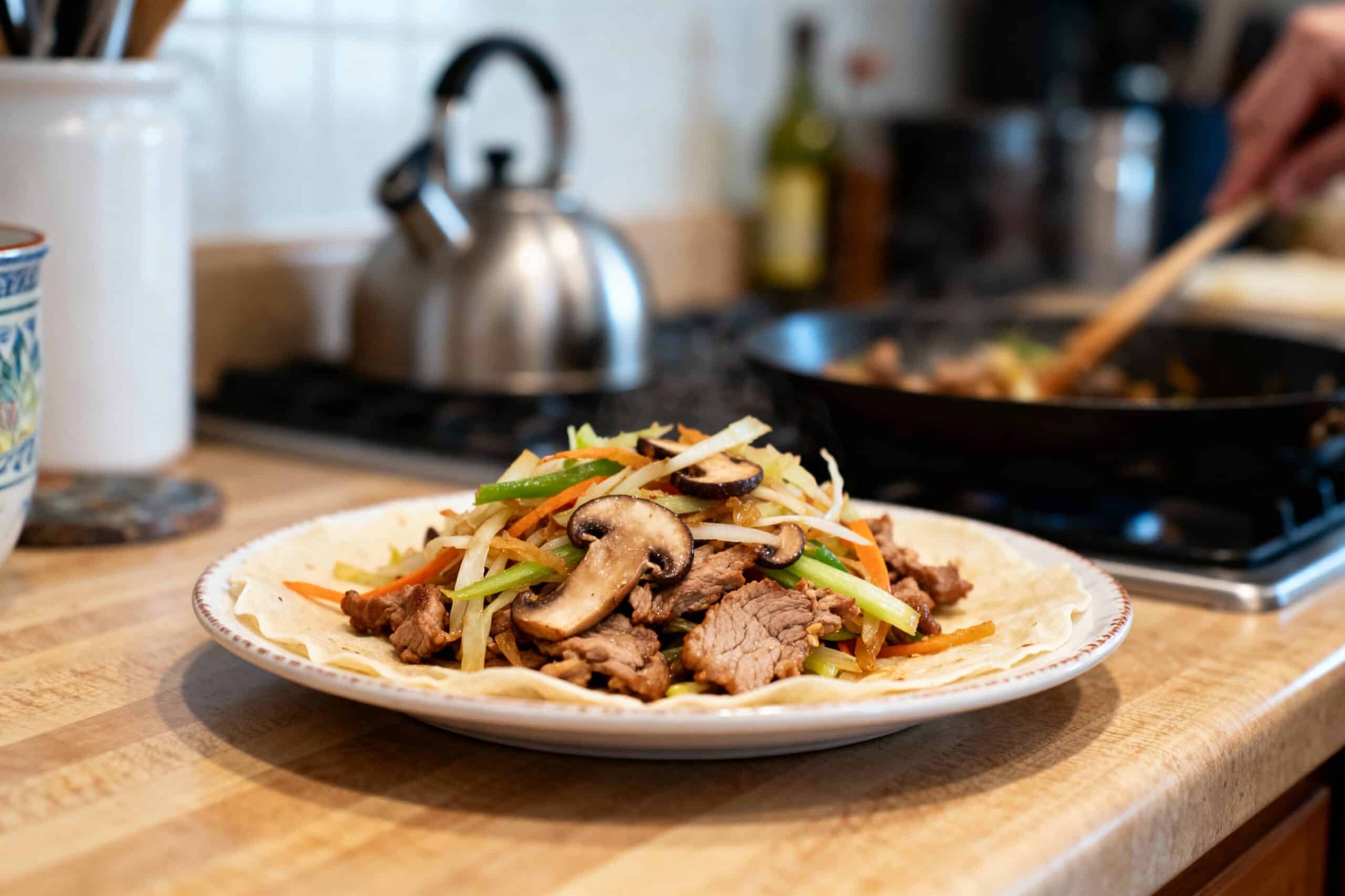
Skip the takeout menu and discover how easy it is to create restaurant-quality moo shu pork homemade in your own kitchen. This complete guide reveals authentic ingredients, proper techniques, and time-saving tips that naturally transform simple pork and vegetables into an impressive Chinese feast. You’ll learn essential secrets for tender meat, crispy vegetables, and traditional flavors that rival your favorite restaurant.
How to make moo shu pork homemade?
Making moo shu pork homemade starts with understanding this classic northern Chinese stir-fry that combines tender marinated pork with crispy vegetables and scrambled eggs. The dish requires thinly sliced pork tenderloin marinated in soy sauce and Shaoxing wine, then stir-fried quickly with cabbage, mushrooms, and wood ear fungus.
The secret lies in proper preparation and timing. You’ll marinate the pork for about 20 minutes while soaking dried mushrooms and lily buds. The cooking happens fast – we’re talking about 8 to 10 minutes total in a screaming hot wok or large skillet.
We recommend gathering all ingredients before you start cooking. This dish moves quickly once you begin, and there’s no time to chop vegetables or mix sauces mid-process. The reward is a restaurant-quality meal that takes less than 30 minutes from start to finish.
What makes moo shu pork authentic, and how to keep it traditional?
Authentic moo shu pork relies on specific ingredients and techniques that have been passed down through generations. Traditional versions use Shaoxing wine for marinating, which gives the pork its distinctive flavor that dry sherry can’t quite replicate.
The texture matters enormously in authentic preparations. Pork should be sliced paper-thin – about 1/8 inch thick – and cut against the grain. This creates the tender, almost silky texture that makes the dish special.
We always include wood ear mushrooms and lily buds, two ingredients that many home cooks skip. These dried components add unique textures and subtle flavors that distinguish authentic moo shu from simplified versions. Wood ear mushrooms provide a satisfying crunch, while lily buds contribute a mild, sweet taste.
Traditional cooking methods call for extremely high heat and constant movement. The vegetables should retain their crispness, never becoming soggy or overcooked. This balance of tender meat and crisp vegetables creates the authentic moo shu experience.
Key ingredients and substitutions for moo shu pork
Pork tenderloin works best for this dish, though pork shoulder can substitute if sliced extra thin. The meat needs to be tender enough to cook quickly without becoming tough. We prefer tenderloin because it stays juicy and cuts beautifully.
For the marinade, Shaoxing wine is ideal, but dry sherry makes an acceptable substitute. Rice vinegar adds brightness, while cornstarch helps tenderize the meat. Low-sodium soy sauce prevents the dish from becoming overly salty.
Dried shiitake mushrooms can replace wood ear mushrooms if needed, though the texture will be different. Fresh button mushrooms work in a pinch, but they lack the substantial bite of their dried counterparts. Lily buds are harder to substitute, but thin strips of yellow bell pepper provide similar color if you can’t find them.
For vegetables, napa cabbage is traditional, but regular green cabbage works fine. Carrots add sweetness and crunch, while green onions provide a mild onion flavor. Fresh eggs bind everything together and add richness to each bite.
Step-by-step recipe: from prep to serving
Moo shu pork homemade ingredients
- 1 pound pork tenderloin, sliced thin against the grain
- 3 tablespoons Shaoxing wine or dry sherry
- 2 tablespoons low-sodium soy sauce
- 1 tablespoon cornstarch
- 2 teaspoons sesame oil
- 1/2 cup dried wood ear mushrooms, soaked and sliced
- 1/4 cup dried lily buds, soaked and trimmed
- 4 cups napa cabbage, shredded
- 2 carrots, julienned
- 4 green onions, sliced diagonally
- 4 large eggs, beaten
- 3 cloves garlic, minced
- 2 tablespoons fresh ginger, minced
- 3 tablespoons vegetable oil for cooking
Step-by-step cooking method
Start by soaking the dried mushrooms and lily buds in warm water for 20 minutes. While they soak, slice your pork as thin as possible – this is crucial for tender results. Mix the pork with soy sauce, Shaoxing wine, cornstarch, and half the sesame oil.
Heat your wok or large skillet until it’s smoking hot. Add one tablespoon of oil and swirl it around. Cook the marinated pork in small batches to avoid crowding, which would cause steaming instead of searing. Each batch takes about 2 minutes.
- Remove pork and set aside
- Add remaining oil to the same pan
- Scramble the eggs until just set, then remove
- Stir-fry garlic and ginger for 30 seconds
- Add cabbage and carrots, cook for 2 minutes
- Return pork and eggs to pan
- Add drained mushrooms and lily buds
- Toss everything together with remaining sesame oil
- Garnish with green onions before serving
The entire cooking process takes about 8 minutes once you start. Speed is essential – high heat and constant movement prevent the vegetables from releasing too much water and becoming mushy.
Serving ideas and pairings
Traditional moo shu pork comes with thin Chinese pancakes, but flour tortillas work perfectly as a substitute. Warm them in a dry skillet or microwave them wrapped in a damp paper towel for 30 seconds.
Hoisin sauce is the classic condiment – spread a thin layer on each pancake before adding the filling. Lee Kum Kee brand offers excellent quality and authentic flavor. Fresh cilantro sprigs add brightness and a pop of color.
For a complete meal, serve alongside steamed jasmine rice or fried rice. Hot and sour soup makes an excellent starter, while jasmine tea or Chinese beer complement the savory flavors perfectly.
Some families enjoy adding extra vegetables like bean sprouts or snow peas. These cook quickly and add different textures to the dish. Just remember to add them at the right time so they stay crisp.
Make-ahead, storage, and troubleshooting tips
Preparation saves time on busy weeknights. Soak dried ingredients and marinate the pork up to 4 hours ahead. Store them separately in the refrigerator until cooking time. Pre-cut vegetables can be stored for up to 2 days in airtight containers.
Cooked moo shu keeps in the refrigerator for up to 3 days. Reheat gently in a skillet over medium heat, adding a splash of water if needed. We don’t recommend freezing because cabbage and mushrooms become watery when thawed.
Common problems include tough pork and soggy vegetables. Tough pork usually means the slices were too thick or the heat wasn’t high enough. Soggy vegetables result from overcrowding the pan or cooking too long.
If your wok isn’t hot enough, the ingredients will steam rather than stir-fry. You should hear aggressive sizzling when ingredients hit the pan. Don’t be afraid of high heat – it’s what creates the distinctive « wok hei » flavor that makes restaurant dishes taste special.
Fresh seasonings make a noticeable difference in the final dish. Replace old soy sauce or sesame oil if they’ve been sitting in your pantry for over a year. Quality ingredients like Pearl River Bridge soy sauce and Eden brand dried lily buds elevate the entire dish.
FAQ
What are the ingredients in moo shu?
The ingredients in moo shu include thinly sliced pork, Shaoxing wine, soy sauce, cornstarch, wood ear mushrooms, lily buds, napa cabbage, carrots, green onions, eggs, garlic, ginger, and vegetable oil. These combine to create a savory and flavorful dish.
What is Moo Shu pork sauce made of?
Moo Shu pork sauce is made of low-sodium soy sauce, hoisin sauce, and rice vinegar, which together create a savory and slightly sweet profile that enhances the flavors of the pork and vegetables in the dish.
How is Chinese pork so tender?
Chinese pork is tender due to proper marination techniques, typically using ingredients like soy sauce and Shaoxing wine. Slicing the pork thinly against the grain also helps to achieve a silky texture that’s essential for dishes like moo shu.
What is in moo shu seasoning?
Moo shu seasoning usually consists of soy sauce, hoisin sauce, and some variations might include rice vinegar and sesame oil. These ingredients contribute depth of flavor and richness to the dish.
How do you make homemade moo shu pork?
To make homemade moo shu pork, marinate thin pork slices in soy sauce and Shaoxing wine, stir-fry with soaked wood ear mushrooms, lily buds, and veggies, then scramble in eggs. The process takes about 30 minutes for a restaurant-quality experience.
What vegetables can be used in moo shu pork?
Vegetables that can be used in moo shu pork include napa cabbage, carrots, and green onions. Some variations also add bean sprouts or snow peas for extra crunch. Choose fresh vegetables to retain their crispness in the stir-fry.

John Smith is a culinary enthusiast and food blogger who discovered his love for Asian cuisine during his years living in Seoul and Tokyo. With a background in journalism, he brings a storytelling approach to exploring the cultural significance behind every dish. John is passionate about making Asian cooking accessible to home cooks and sharing the vibrant food scenes he encounters in his travels.


