
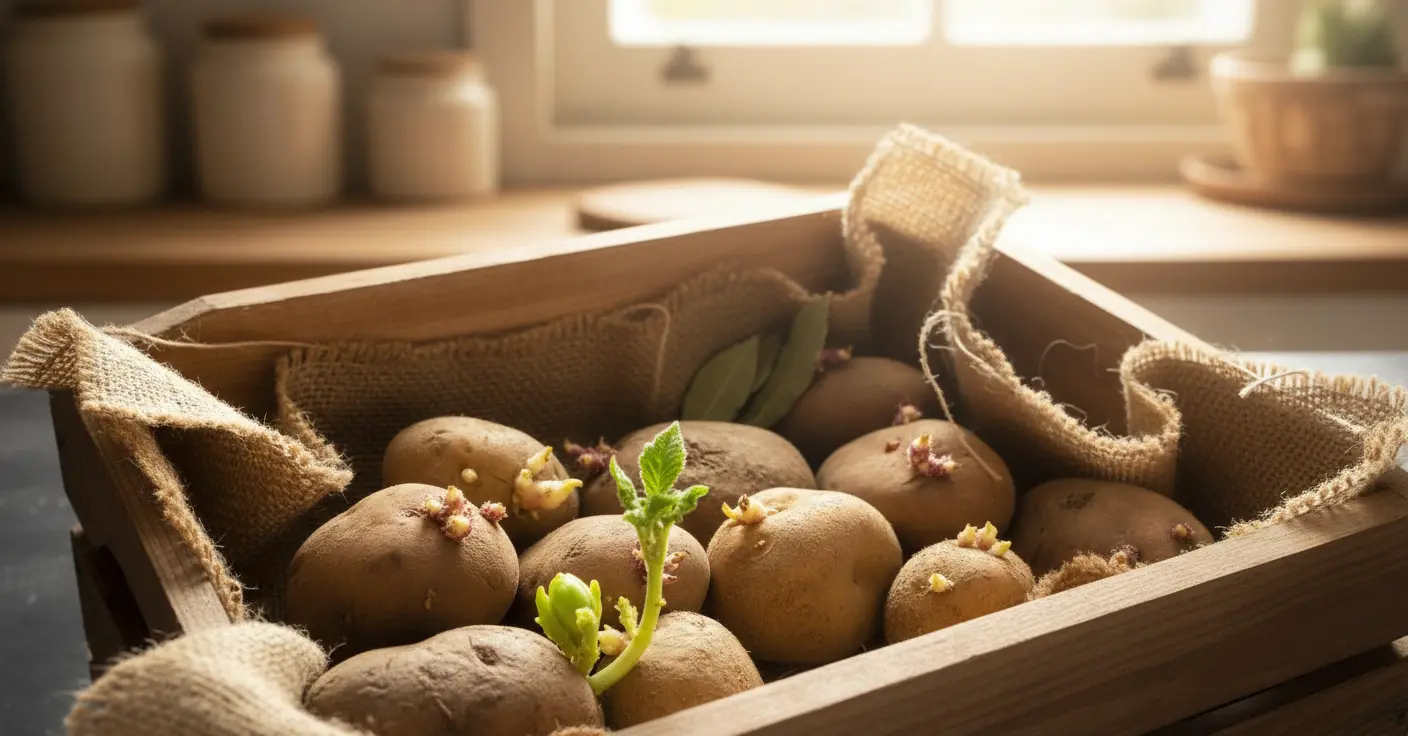
You reach into the back of the cupboard, hand fishing for that last potato you forgot about—only to discover a startling new science project growing there. Sprouted potatoes: the arch-nemesis of your kitchen ambitions! But before you panic and start talking to your spuds about early retirement, breathe easy. There are clever, practical tricks to keep your potatoes fresh—without resorting to the mystical apple hack your grandma swears by.
Understanding Sprouting: Why Do Potatoes Get Those Unwanted Shoots?
First things first: if you’ve found yourself confronted with a bag full of potatoes bristling with sprouts, you’re far from alone. More importantly, sprouting is entirely natural. Potatoes, like secret agents on a covert mission, will start to develop these sprouts if they’ve been lounging in a spot that’s too warm, too damp, or too exposed to light. All these conditions give them a little too much encouragement to grow!
Interestingly, untreated or organic potatoes are even more likely to sprout. Why? Because these potatoes haven’t been given any anti-sprouting treatment. So, if your organic gems start going green and sprout-happy, don’t blame them. In fact, sprouting isn’t a sign of doom—not at all. On the contrary, it means your potatoes are healthy and just doing their best plant impression.
The Basics: Smart Steps to Slow Down Sprouting
- Sort with care: Go through your root vegetables and separate any that are already damaged or have started to go green. Those potatoes are like bad influences at a party—the longer they hang around, the more likely they’ll convince others to sprout, too.
- Clean (gently): Use a small brush to remove any extra soil from your potatoes, but don’t scrub away the skin. Only do this if it seems needed—nobody’s looking for potato spa day here.
- Storage is key: The golden rule? Keep your potatoes somewhere cool, dry, and out of the light. The ideal location: a cellar or basement, away from drafts. Don’t have a fancy cellar? No worries. A wooden crate, basket, or box in a dark spot will do. The big no-no? Never keep potatoes in a plastic bag or any airtight container. That just accelerates the sprouting effect.
It’s all about circulation. Potatoes want to breathe. Deprive them of air, and they rebel—by sprouting furiously!
Natural Tricks: When Grandma Swears by Apples and More
Now, let’s talk about that old-fashioned wisdom: putting an apple amongst your stored potatoes. There’s actually some real science (and not just nostalgia) behind this! Apples release ethylene gas, which acts as a natural anti-sprouting agent. Placing an apple in your potato bin can help keep your spuds sprout-free for several weeks.
But if apples aren’t handy—or you’re looking to up your preservation game—consider sprinkling some charcoal over the potatoes. Charcoal can help keep them fresher for longer. And, for the gadget lovers, there are always those anti-sprouting storage bags on the market. Pick the method that suits your pantry and your patience best.
Safety First: Can You Eat Sprouted Potatoes?
Before you resign yourself to tossing those sprouted spuds, here’s some reassuring news: sprouts themselves are only harmful if you chow down on them in large amounts. It’s safe to eat sprouted potatoes as long as you remove the shoots. Make sure to also cut off any green patches—the result of light exposure. This isn’t just about flavor or aesthetics: the green parts contain solanine, a toxin that, if consumed in significant quantities, is indeed a health risk.
So, don’t worry if you spot the odd sprout or green patch; just trim accordingly and continue your culinary adventures.
In short, potatoes—like all of us—prefer cool, dry, dark spaces and some breathing room. Give them what they need, skip the plastic bags, and remember: an apple a day might indeed keep the sprouts at bay, but you’ve got options galore to outsmart those pesky shoots!

John Smith is a culinary enthusiast and food blogger who discovered his love for Asian cuisine during his years living in Seoul and Tokyo. With a background in journalism, he brings a storytelling approach to exploring the cultural significance behind every dish. John is passionate about making Asian cooking accessible to home cooks and sharing the vibrant food scenes he encounters in his travels.


