
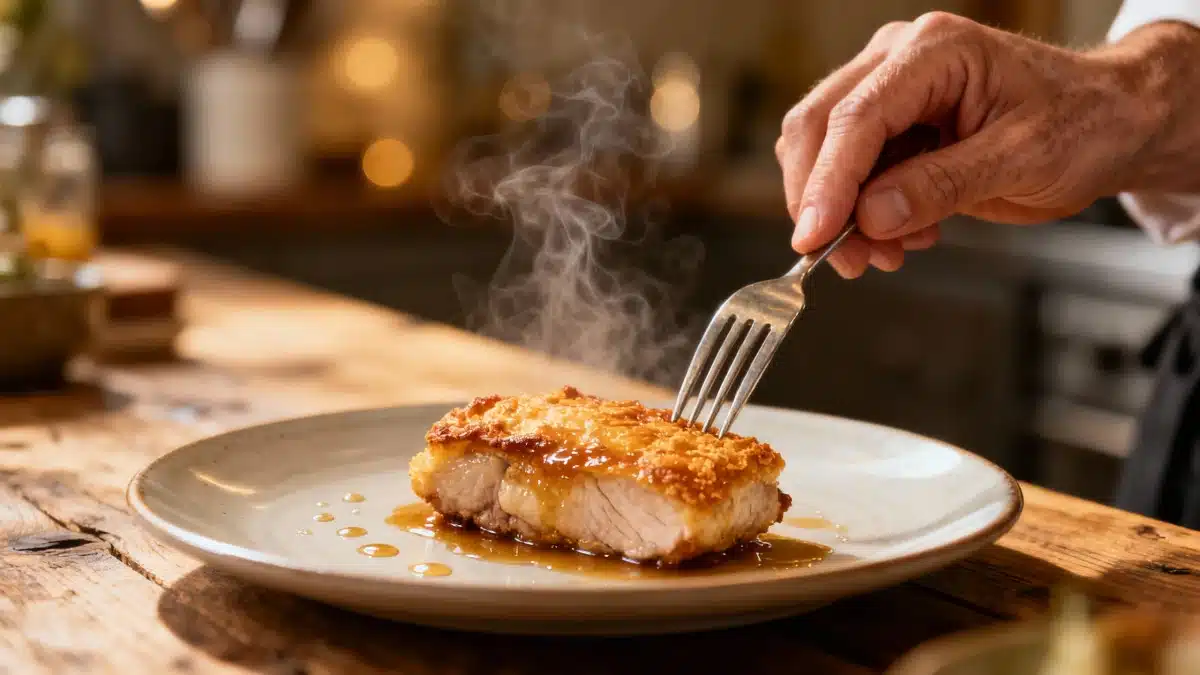
It began as a humble meal, simmering away on farmhouse stoves, once scorned as the « poor man’s food ». But today, kig-ha-farz is making a triumphant return, not just in the hearts of Bretons but in the hands of daring chefs and delighted diners across France!
Say It Like a Local: The Delicious Sound of Kig-ha-Farz
Before you dash into your nearest Breton restaurant, let’s tackle those syllables: the « G » in « kig » isn’t your run-of-the-mill G. It’s a savory blend of « K » and « G » – go on, try it out loud. And as for that mysterious « Z » in « farz », it’s almost an « S » by the time it reaches your tongue. A linguistic dance that foreshadows the culinary treat ahead.
From Simple Origins: The Birth of a Classic
In the beginning, kig-ha-farz was as simple as could be: pork belly, a handful of vegetables (think carrots and cabbage), and far – either black or white. Yes, for a long time, it wore the slightly stigmatised label of « the poor man’s dish ». But as we know, fashion is cyclical, and so are appetites!
- Farz gwen: the white far, made with wheat flour.
- Farz sac’h: the black far, crafted from buckwheat (black wheat) flour.
Both varieties start life as their own doughs: flour, butter, eggs, a splash of milk or crème fraîche. For farz gwen, add sugar and raisins if your sweet tooth insists. Once ready, each mixture is tucked into its own « far bag » and placed in the pot beside the simmering meat and veggies – one big, happy Breton family!
Culinary Comeback: How Kig-ha-Farz Won Over Chefs and Foodies
Kig-ha-farz hasn’t lost its charm. If anything, its appeal is growing – restaurants have added it to their menus, whether in classic form or with a creative twist. The dish graces tables at Brélès at Jardin de l’aber or at Plouegat-Moysan’s Le puits de Jeanne. But its fame doesn’t stop there: throughout Côtes-d’Armor, and even as far as Rennes, you’ll spot this marvelous dish just waiting to be savored.
Prefer to picnic or keep it cosy at home? Breton markets often boast ready-to-go portions, some restaurants offer takeaway, and – yes! – you can now even order a quality kig-ha-farz online, no plane ticket to Brittany required.
Endless Variations (and Leftovers Worth Waiting For)
Tradition is heartwarming, but experimentation is encouraged. Some fans toss in Breton sausages with the other meats; others sprinkle lardons into the creamy lipig sauce. And there’s a special chef’s secret whispered from grandmother to granddaughter: let the far bags cook for three or four hours if you can, then resist temptation and wait until the next day – or even the day after that – before digging in. Patience, it seems, rewards the palate. Yes, farz is also at its best after a nap in the fridge.
- Cook farz for 3 to 4 hours for more flavor.
- Try serving it the next day for even richer taste.
And if you’re looking for the perfect local drink to accompany your meal, Ty Jaune, a round and bold pastis reimagined with Armorican flair, is recommended well-chilled and best enjoyed in the shade of a menhir (if you find one nearby). For a true local touch, there’s even a bottle-glass set featuring the À l’Aise Breizh spirit – ready to offer or savor for a burst of Breton pride.
So what are you waiting for? Whether you crave nostalgia, adventure, or simply a well-earned hearty meal, let yourself be tempted by the flavors of Brittany. Taste the past, savor the present, and don’t forget to pronounce it right: kig-ha-farz, s’il vous plaît!

John Smith is a culinary enthusiast and food blogger who discovered his love for Asian cuisine during his years living in Seoul and Tokyo. With a background in journalism, he brings a storytelling approach to exploring the cultural significance behind every dish. John is passionate about making Asian cooking accessible to home cooks and sharing the vibrant food scenes he encounters in his travels.


