
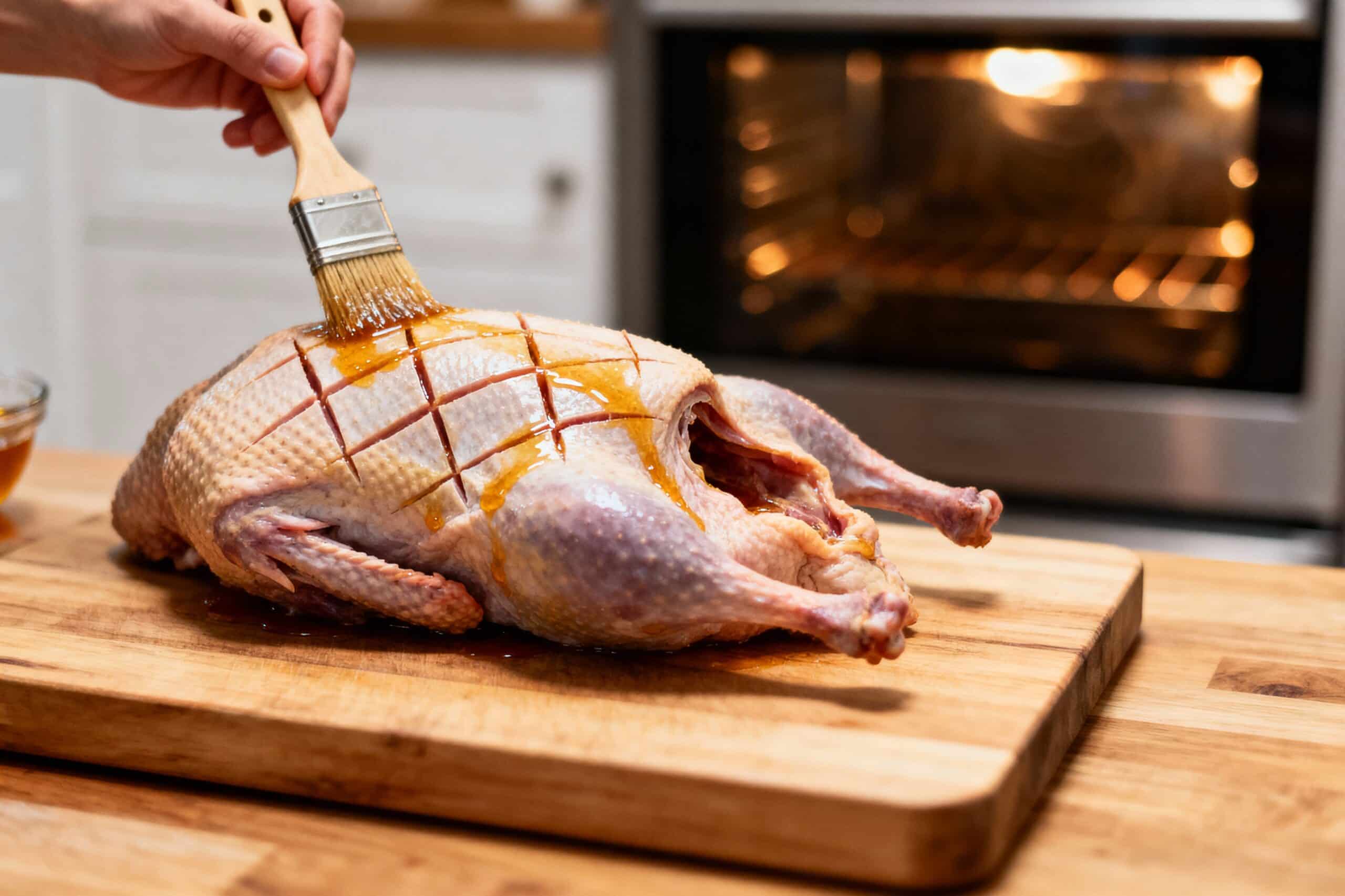
Skip the restaurant wait and master crispy-skinned duck at home with this simplified peking duck recipe that naturally breaks down intimidating techniques into manageable steps. You’ll discover why air-drying is the secret weapon for restaurant-quality results, learn exact temperatures and timing that guarantee juicy meat with crackling skin, and find smart substitutions that work with everyday kitchen equipment and ingredients you can actually buy.
What makes an easy peking duck recipe you can make at home?
A peking duck recipe becomes achievable at home when we skip the complex traditional methods and focus on oven roasting instead. Professional kitchens use specialized equipment like skin pumps and vertical ovens that most home cooks simply don’t have.
The key difference lies in simplifying the process while keeping the delicious results. We can create that signature crispy skin and tender meat using your regular oven and some patience.
What transforms an intimidating restaurant dish into manageable home cooking is choosing store-bought ducks around 5.5 pounds. This size cooks evenly and fits most home ovens perfectly.
Peking duck recipe: from prep to roast
Ingredients for the peking duck recipe
Getting the right ingredients sets you up for success with this classic dish:
- 1 whole duck (about 2.5 kg or 5.5 lbs)
- 3 tablespoons maltose or honey
- 2 tablespoons hot water
- 1 tablespoon white vinegar
- 2 apples, quartered
- 4 scallions, chopped
- 3 cloves garlic
- 2 star anise
- 1 cinnamon stick
- 3 bay leaves
- Salt and pepper to taste
The maltose creates that glossy finish we associate with restaurant-quality duck. If you can’t find maltose, honey works well as a substitute.
Steps for the peking duck recipe
This process takes about 2 days including marination and drying time, but the actual hands-on work is quite manageable:
- Score the duck skin in a crosshatch pattern, being careful not to cut into the meat
- Pour boiling water over the entire duck to tighten the skin
- Stuff the cavity with apples, scallions, garlic, and aromatics
- Mix maltose with hot water and vinegar to create your glaze
- Brush the glaze all over the duck skin
- Refrigerate uncovered for 24-48 hours to air-dry
- Preheat oven to 425°F (220°C)
- Roast at high heat for 15-20 minutes, then reduce to 350°F (175°C)
- Continue roasting for 45-60 minutes until internal temperature reaches 165°F (74°C)
- Rest for 15 minutes before carving
We can’t stress enough how important that air-drying step is. This removes surface moisture, which is absolutely essential for achieving crispy skin.
Crisp skin tips and doneness checks
Air-drying and glaze techniques
The secret to restaurant-quality crispy skin lies in proper air-drying. After glazing, place your duck on a rack in the refrigerator completely uncovered.
A fan-assisted approach works even better if you have space. Position a small fan to circulate air around the duck, which speeds up moisture removal.
The glaze technique involves multiple layers. We recommend applying the maltose mixture twice – once before the initial drying and again after 12 hours. This builds up that beautiful lacquered appearance.
Some home cooks pour hot oil over the skin during the final minutes of roasting. This extra step can boost crispiness, though it does create quite a bit of smoke in your kitchen.
Oven temps, timing and doneness
Start with a high temperature of 390-430°F (200-220°C) for the first 15-20 minutes. This initial blast helps render the fat and starts the crisping process.
Then drop the temperature to around 356°F (180°C) for even cooking. Total cooking time ranges from 1 to 1.5 hours depending on your duck’s size.
Using a meat thermometer takes the guesswork out of doneness. The internal temperature should reach 165°F (74°C) when measured in the thickest part of the thigh.
Covering wing and leg tips with aluminum foil prevents them from burning while the body finishes cooking. We also suggest a final 6-10 minute blast at higher heat if the skin needs extra crisping.
Equipment and substitutions for home cooks
You don’t need professional-grade equipment to make excellent Peking duck at home. A standard convection oven or fan-assisted oven actually works better than a regular oven for even browning.
For serving wraps, ready-made pancakes from Asian grocery stores save time. Spring roll wrappers or even steamed bao buns work as creative alternatives.
Sweet bean sauce or hoisin sauce replaces the traditional accompaniment. We like to stir-fry store-bought hoisin with a little oil and sugar to enhance the restaurant-style flavor.
Instead of julienned cucumber and scallions, try pickled radish, bean sprouts, or crisp lettuce. These substitutions add different textures while keeping the fresh contrast against the rich duck.
Serving, leftovers and quick reference
Carve the rested duck into small pieces, separating the crispy skin from the meat when possible. This allows guests to enjoy both textures in their wraps.
Leftover duck meat transforms into fantastic sandwiches or stir-fries the next day. Don’t waste the carcass either – simmer it with Napa cabbage or winter melon for a rich soup.
The beauty of this home version is its flexibility. Unlike traditional methods requiring specialized skills, this approach lets you adjust timing and techniques based on your kitchen setup and schedule.
Remember that patience pays off with this dish. Those long drying periods and careful temperature control make the difference between good duck and extraordinary duck that rivals your favorite restaurant.
FAQ
What is the best way to cook Peking duck?
Peking duck is best cooked by first air-drying the duck for 24-48 hours to achieve crisp skin. Then, roast it in a preheated oven at high temperatures initially to render fat, followed by a lower temperature until fully cooked. This method helps retain moisture while getting the skin crispy.
How is Peking duck traditionally made?
Peking duck is traditionally made by inflating the duck to separate the skin from the meat, followed by scalding it with boiling water. After seasoning, the duck is air-dried and then roasted until the skin is crispy, typically served with pancakes and various accompaniments.
How does Peking duck get so crispy?
Peking duck gets so crispy primarily through air-drying the skin, which removes moisture. This step, combined with roasting at high temperatures, helps to render fat and crisp up the skin. Glazing with maltose or honey further enhances the texture and appearance.
What seasoning is used for Peking duck?
Seasoning for Peking duck typically includes Chinese five-spice powder, maltose or honey, and soy sauce. The flavors are enhanced by stuffing the duck with aromatics such as garlic, scallions, and apples, which contribute to the overall taste during cooking.
What ingredients do I need for a homemade Peking duck recipe?
For a homemade Peking duck recipe, you need a whole duck, white vinegar, maltose or honey, Chinese five-spice powder, Chinese cooking wine, and sweet bean sauce, along with cucumbers, scallions, and Mandarin pancakes to serve.
How do I prepare the duck before roasting for Peking duck?
To prepare the duck before roasting for Peking duck, clean the duck and soak it in a mixture of water and white vinegar. This helps to tenderize and clean the skin and is essential for achieving optimal texture during roasting.

John Smith is a culinary enthusiast and food blogger who discovered his love for Asian cuisine during his years living in Seoul and Tokyo. With a background in journalism, he brings a storytelling approach to exploring the cultural significance behind every dish. John is passionate about making Asian cooking accessible to home cooks and sharing the vibrant food scenes he encounters in his travels.


