
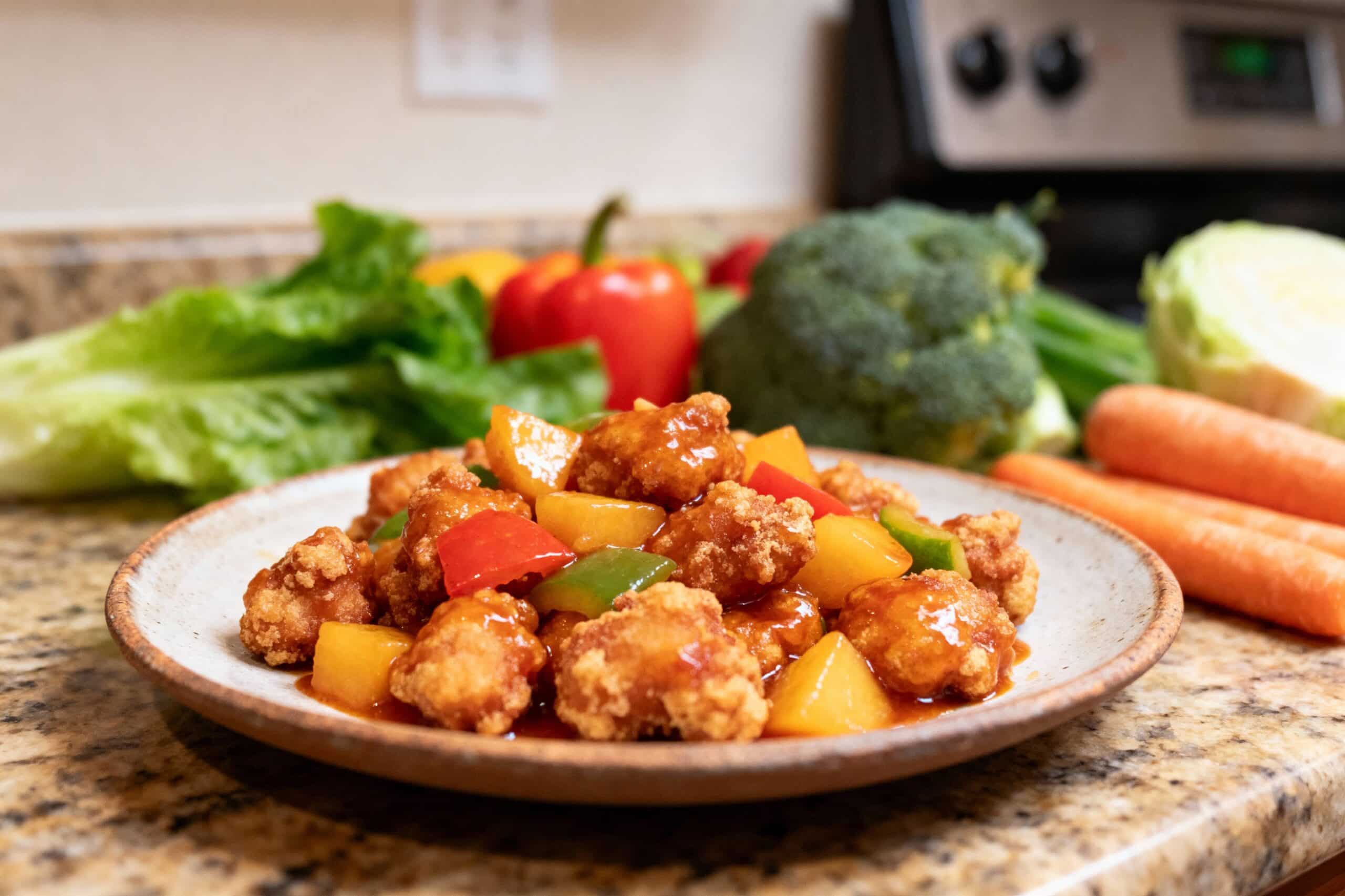
Transform your kitchen into a Chinese restaurant with this complete guide to creating sweet and sour pork homemade that rivals your favorite takeout spot. You’ll discover professional secrets like double-frying and velveting that naturally produce restaurant-quality results, plus smart ingredient swaps and storage tips that make this dish both delicious and practical for busy families.
How can you make delicious sweet and sour pork at home?
Making sweet and sour pork homemade is easier than you might think. The secret lies in choosing the right cut of meat, creating the perfect crispy coating, and balancing the tangy-sweet sauce just right. You’ll need about 1 pound of pork shoulder or pork butt, which provides the best marbling for juicy results.
The magic happens through a process called velveting, where you marinate the pork in egg whites and cornstarch. This technique keeps your meat tender even when fried twice for that restaurant-quality crispiness. We advise using cornstarch instead of regular flour for coating since it creates that signature golden puff when it hits the hot oil.
Your sauce should combine ketchup, vinegar, sugar, and pineapple juice for that classic flavor profile. Fresh pineapple chunks work best because they caramelize beautifully during cooking. Bell peppers and onions add crunch and color to round out this beloved dish.
Sweet and sour pork homemade
ingredients for the sweet and sour pork homemade version
Getting your ingredients right makes all the difference in this recipe. Start with pork shoulder or pork butt rather than lean cuts like tenderloin, which can dry out during the double-frying process. These fattier cuts stay moist and tender throughout cooking.
For the marinade, you’ll need:
- 1 pound pork shoulder, cut into 1-inch chunks
- 1 egg white
- 2 tablespoons soy sauce
- 1 teaspoon salt
- 1 teaspoon sugar
- 1 tablespoon cornstarch
- 1/2 teaspoon baking soda for velveting
The sauce ingredients include ketchup, apple cider vinegar, brown sugar, pineapple juice, and a splash of Worcestershire sauce. You’ll also want fresh pineapple chunks, bell peppers in different colors, and a medium onion. Neutral oils like vegetable or canola oil work best for frying since they have high smoke points.
steps to cook the sweet and sour pork homemade recipe
Start by marinating your pork chunks for at least 30 minutes. Mix the egg white, soy sauce, salt, sugar, cornstarch, and baking soda in a bowl. The baking soda works its magic by breaking down proteins, making tough cuts wonderfully tender without rinsing.
Here’s the cooking process:
- Heat oil to 350°F in a deep pot or wok
- Coat marinated pork pieces in additional cornstarch
- First fry: Cook pork for 3-4 minutes until golden
- Remove and drain on paper towels
- Second fry: Return pork to oil for 1-2 minutes for extra crispiness
- Stir-fry vegetables until just tender
- Combine sauce ingredients and cook until glossy
- Toss everything together for about 10 seconds
The double-frying technique gives you that perfect contrast between the crunchy exterior and juicy interior. We recommend frying in small batches to avoid overcrowding, which can make your pork soggy instead of crispy.
Key techniques for tender, crispy pork
The velveting process sets professional results apart from amateur attempts. When you mix baking soda with your marinade, it raises the meat’s pH level, which helps proteins retain moisture during cooking. This technique works especially well with chunkier pieces since you don’t need to rinse off the baking soda like with thinner slices.
Double frying might seem excessive, but it serves two distinct purposes. The first fry at 350°F cooks the pork through completely. The second fry at a slightly higher temperature creates that signature golden crust that stays crispy even after tossing with sauce.
Cornstarch coating beats regular flour every time for this dish. It puffs up beautifully during frying and creates a lighter, crunchier texture. Mix your sauce separately and have everything ready before you start cooking since the final assembly happens quickly. About 2 minutes of tossing allows the sauce to thicken properly while coating every piece.
Temperature control makes or breaks this recipe. Use a thermometer to monitor your oil temperature, and don’t skip the draining step between fries. A wire rack works better than paper towels for keeping that first batch crispy while you finish cooking.
Sweet and sour pork homemade variations and serving ideas
sweet and sour pork homemade variations
You can easily adapt this recipe for different dietary needs and preferences. Chicken thighs work wonderfully as a substitute for pork, though they cook faster so watch your timing. For vegetarian versions, try firm tofu or large mushroom chunks using the same marinade and coating technique.
Vegetable variations let you customize based on what’s in season. Sugar snap peas, broccoli florets, or sliced carrots all work well. Some cooks add a handful of cashews or water chestnuts for extra crunch. Fresh ginger and garlic in the marinade boost the flavor profile significantly.
If you prefer avoiding deep frying, try oven-baking the coated pork at 425°F for about 20 minutes, flipping halfway through. While it won’t achieve the same level of crispiness, it’s still delicious and much healthier. Shallow frying in a cast-iron skillet offers a middle ground between health and texture.
serving ideas and storage for sweet and sour pork homemade
Steamed jasmine rice remains the classic pairing for sweet and sour pork homemade, but fried rice works beautifully too. The neutral flavors let the tangy sauce shine while soaking up any extra liquid. Some families enjoy serving it over crispy chow mein noodles for added texture.
This dish tastes best when served immediately, but leftovers keep well in airtight containers for up to three days in the refrigerator. Reheat gently in a skillet rather than the microwave to preserve some of the coating’s crispiness. The sauce thickens as it cools, so add a splash of pineapple juice when reheating if needed.
For meal prep, store the crispy pork and sauce separately until ready to eat. This prevents the coating from getting soggy. You can prepare the marinade and cut vegetables ahead of time, making weeknight cooking much simpler. The whole dish freezes reasonably well for up to one month, though the texture won’t be quite as crispy after thawing.
FAQ
What are the main ingredients for homemade sweet and sour pork?
The main ingredients for homemade sweet and sour pork include pork (shoulder or butt), bell peppers, onion, fresh pineapple, cornstarch, flour, sugar, vinegar, ketchup, and soy sauce. These ingredients create a flavorful and satisfying dish when combined properly.
How do you make the sweet and sour sauce from scratch?
To make the sweet and sour sauce from scratch, mix sugar, vinegar, ketchup, and pineapple juice in a bowl. Adjust the quantities according to your taste to achieve the desired sweet and tangy flavor for your homemade sweet and sour pork dish.
Can I make sweet and sour pork without deep frying?
Yes, you can make sweet and sour pork without deep frying by oven-baking the coated pork at 425°F for about 20 minutes, flipping halfway through. Although the texture won’t be as crispy, it is a healthier alternative that still retains delicious flavors.
What cut of pork is best for sweet and sour pork?
The best cut of pork for sweet and sour pork is pork shoulder or pork butt. These cuts provide better marbling for juiciness and tenderness, ensuring that the meat remains moist during the double-frying process that results in a crispy texture.
What cooking technique is used to keep the pork tender?
The cooking technique used to keep the pork tender in sweet and sour pork is called velveting. This involves marinating the pork in egg whites and cornstarch, which helps retain moisture and ensures that the meat remains juicy and tender throughout the cooking process.
How should I store leftovers of sweet and sour pork?
To store leftovers of sweet and sour pork, keep them in airtight containers in the refrigerator for up to three days. Reheat gently in a skillet instead of the microwave to maintain the coating’s crispiness, adding a splash of pineapple juice if needed.

John Smith is a culinary enthusiast and food blogger who discovered his love for Asian cuisine during his years living in Seoul and Tokyo. With a background in journalism, he brings a storytelling approach to exploring the cultural significance behind every dish. John is passionate about making Asian cooking accessible to home cooks and sharing the vibrant food scenes he encounters in his travels.


